Shows4.8(8,004)
From Tokyo · 2 hrs
Tokyo: Sumo Show with Chicken Hot Pot and Geisha
- Small groups available
from $102
View tourGuides
Language
EnglishCurrency
US dollar · $GetYourGuide uses the currency you choose.
Watch wrestlers charge a few steps from your table, learn the rituals from an English-speaking host, try a bout yourself, then sit down to a steaming chicken hot pot.
Frequently fully booked 6 days in advanceReserve now, pay later
Insert · the evening
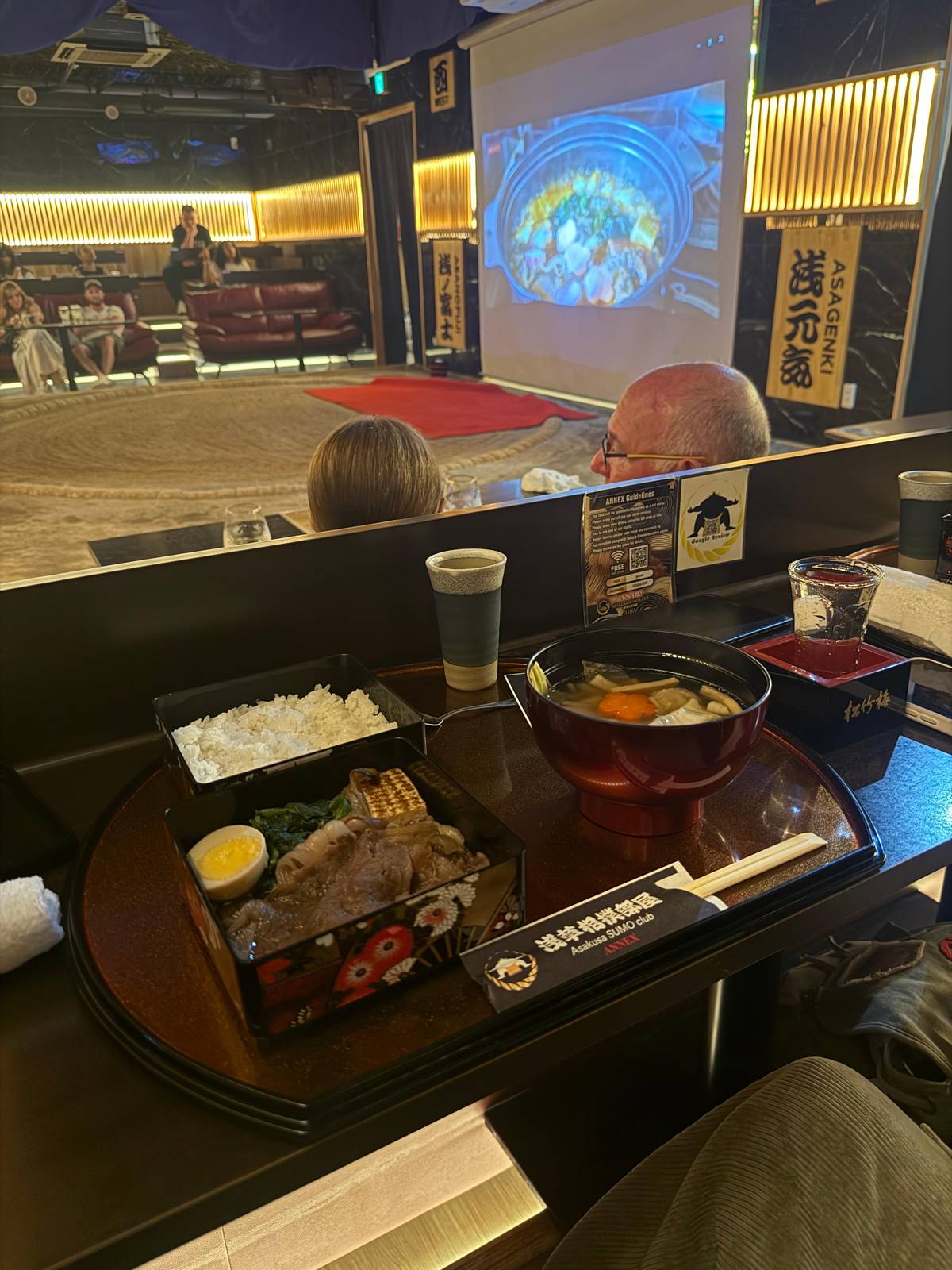
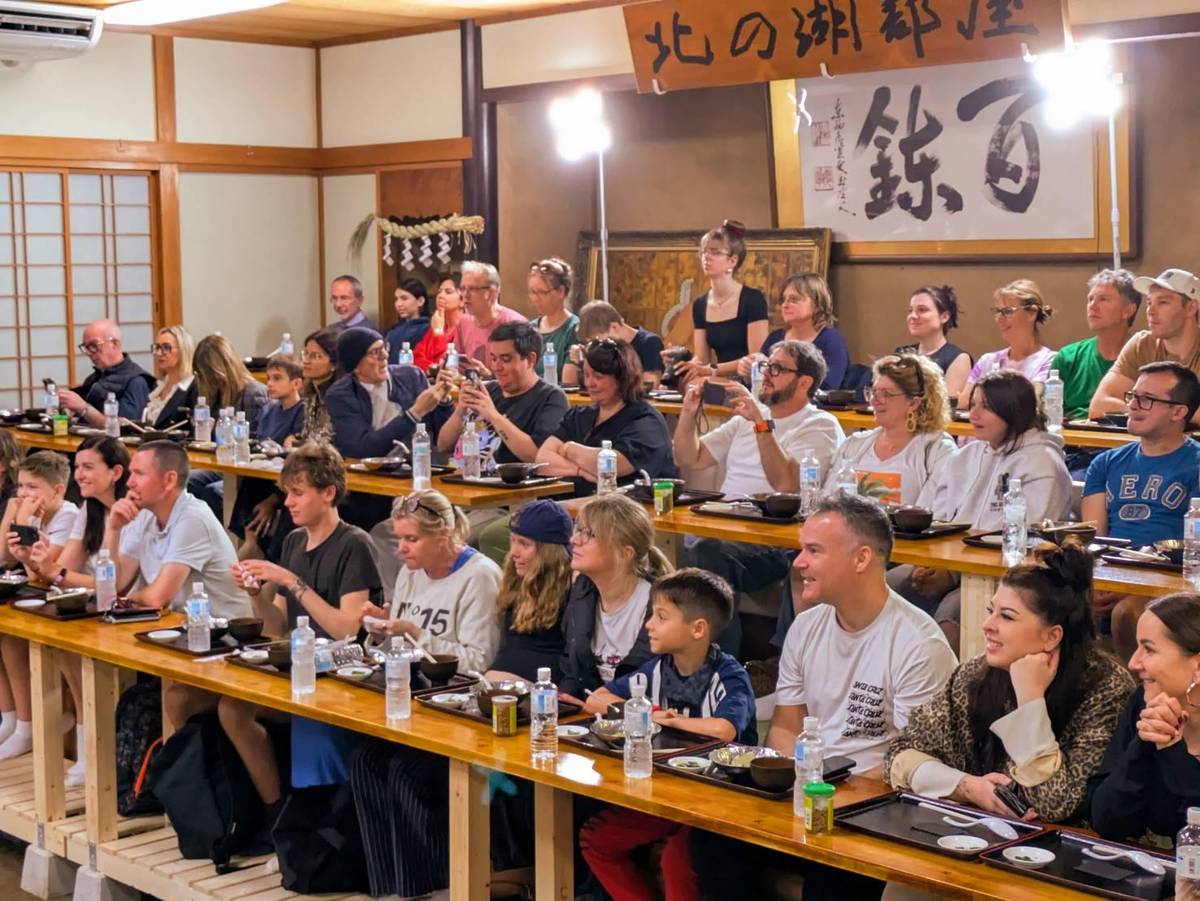
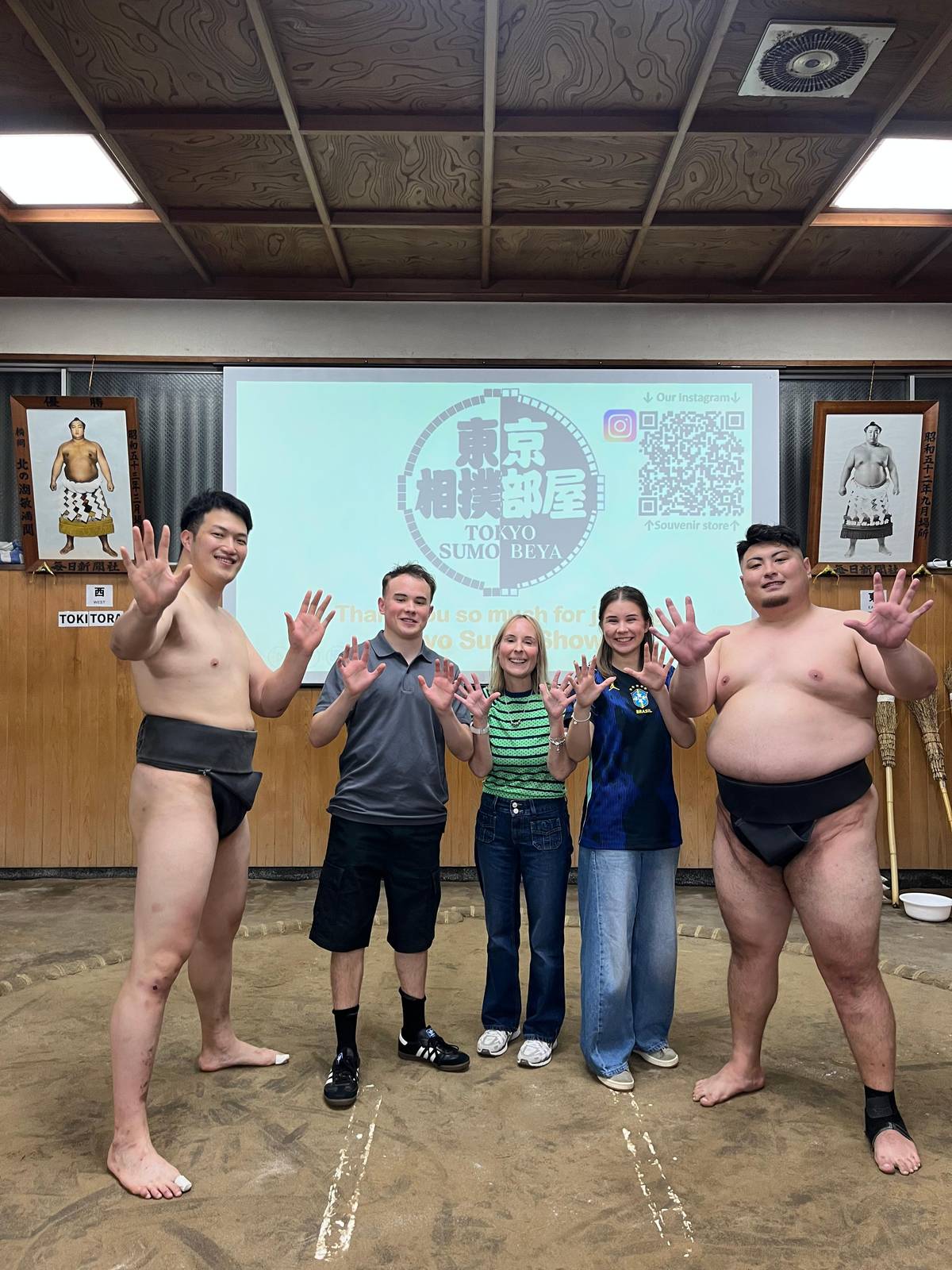
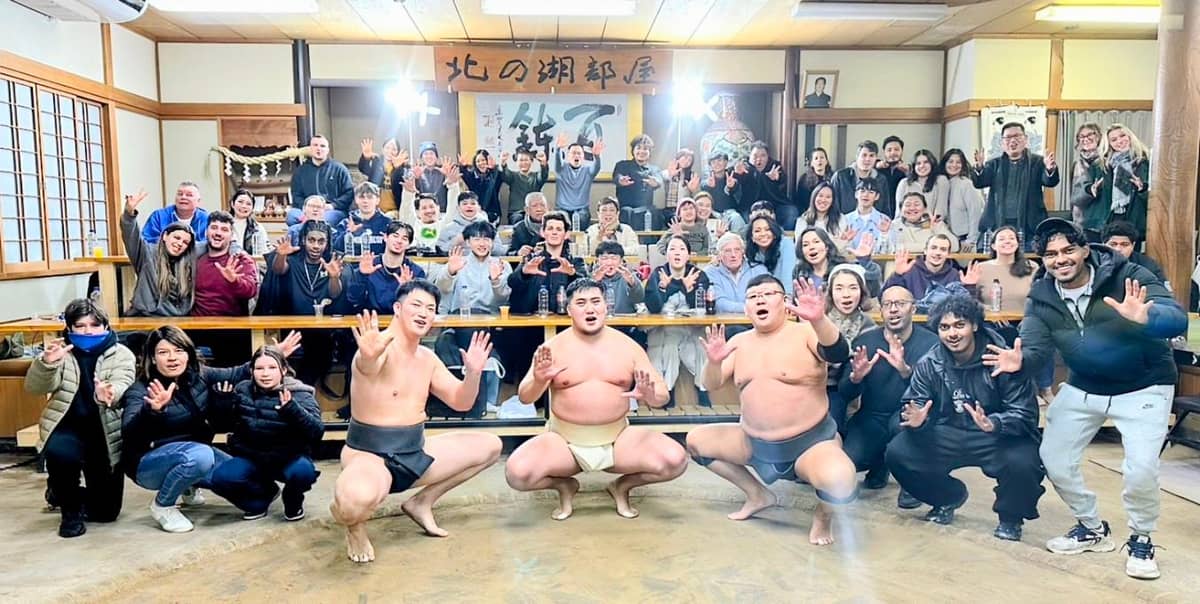
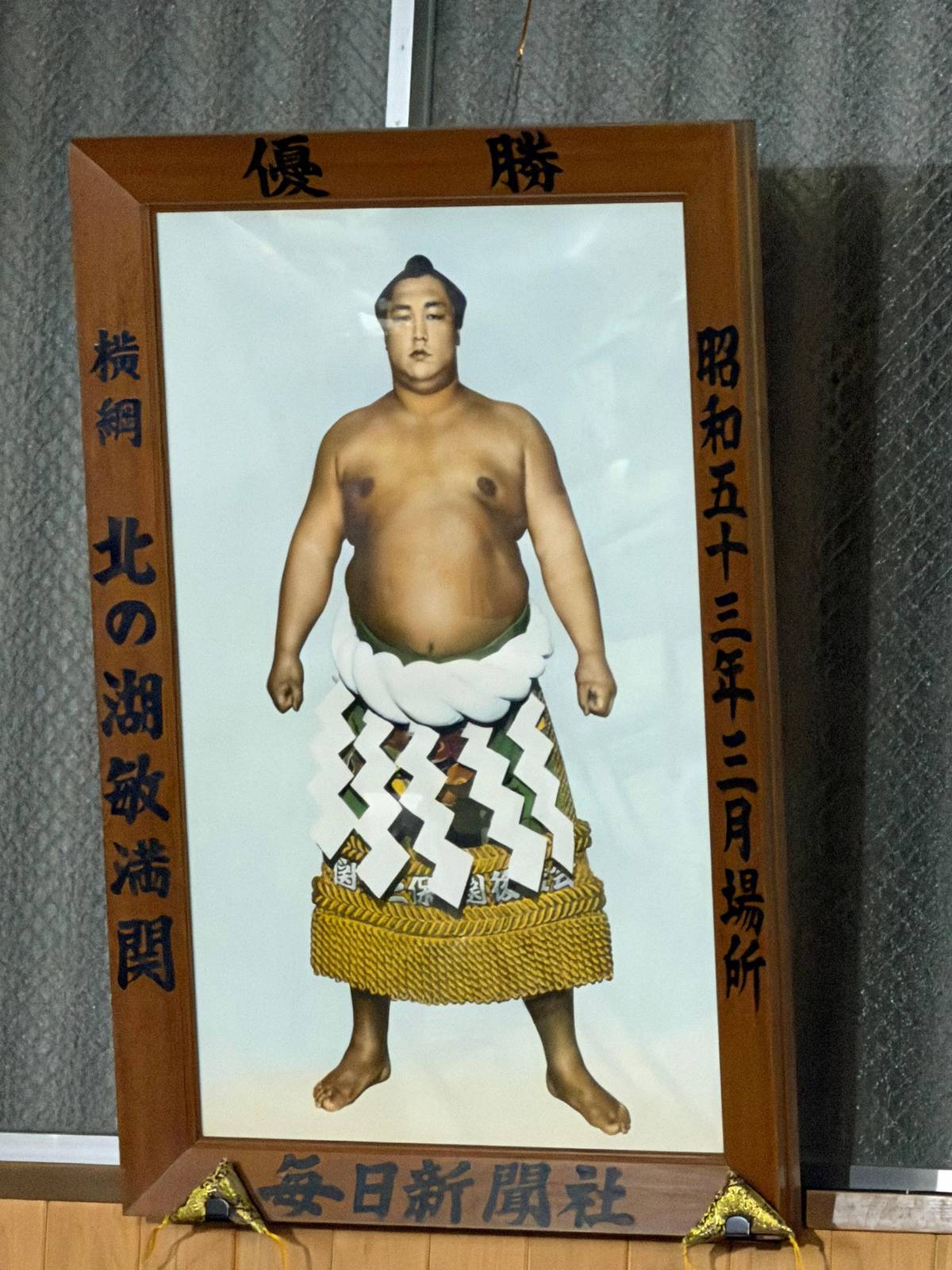
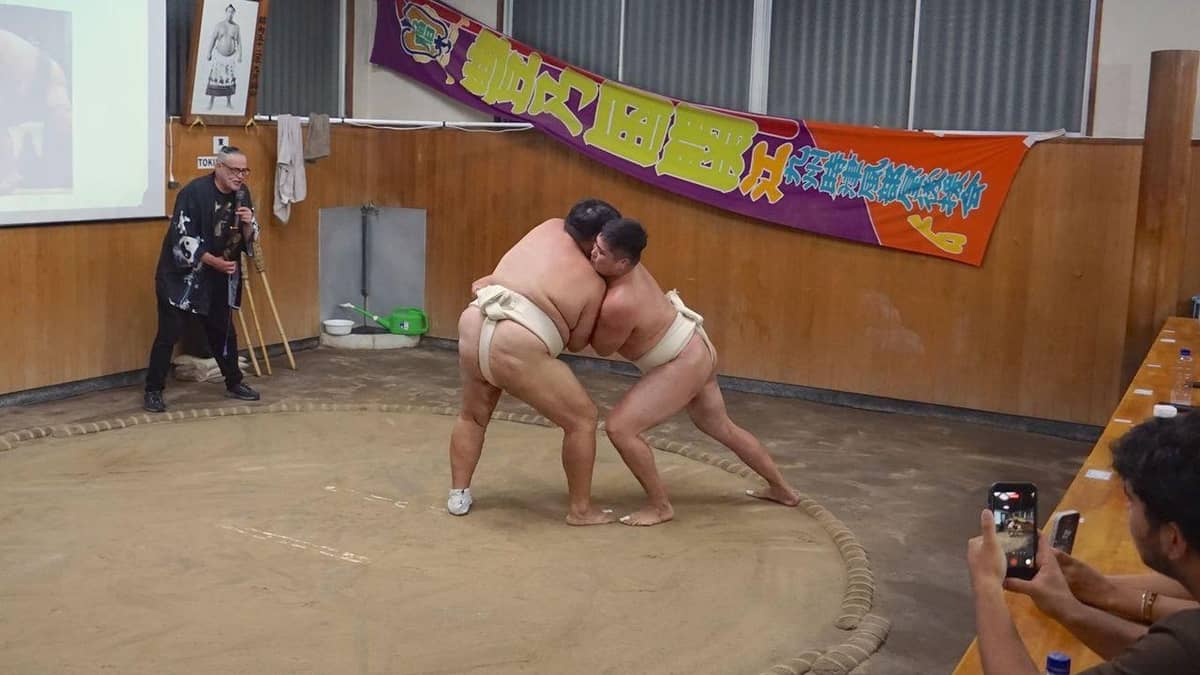
You take your seat at long tables beside a clay ring, in a hall that looks the way a working sumo stable should: portraits of champions on the walls, banners overhead and sand under the wrestlers' feet. Then the host steps forward and the evening begins, with an English explanation of what you are about to see.
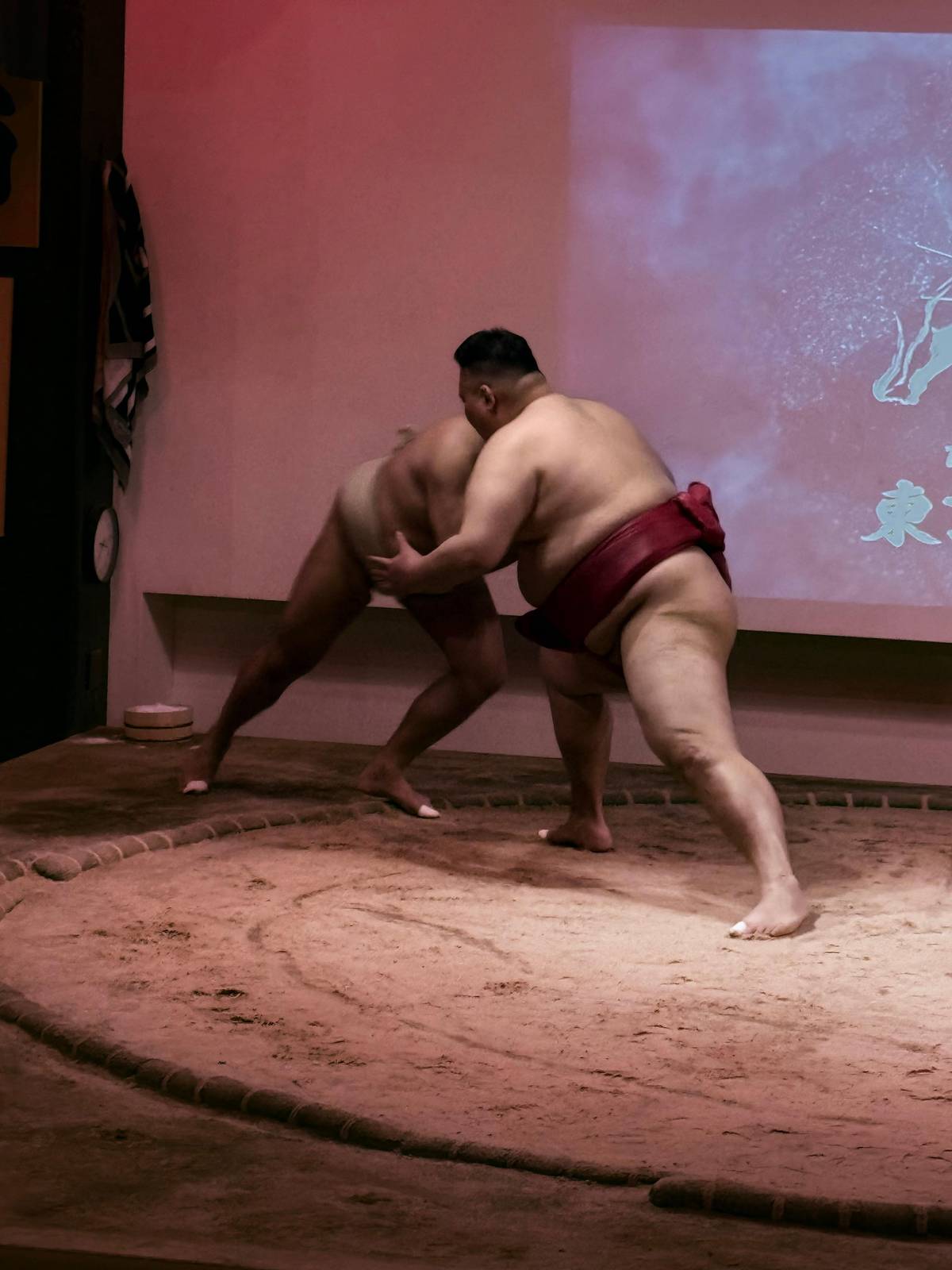
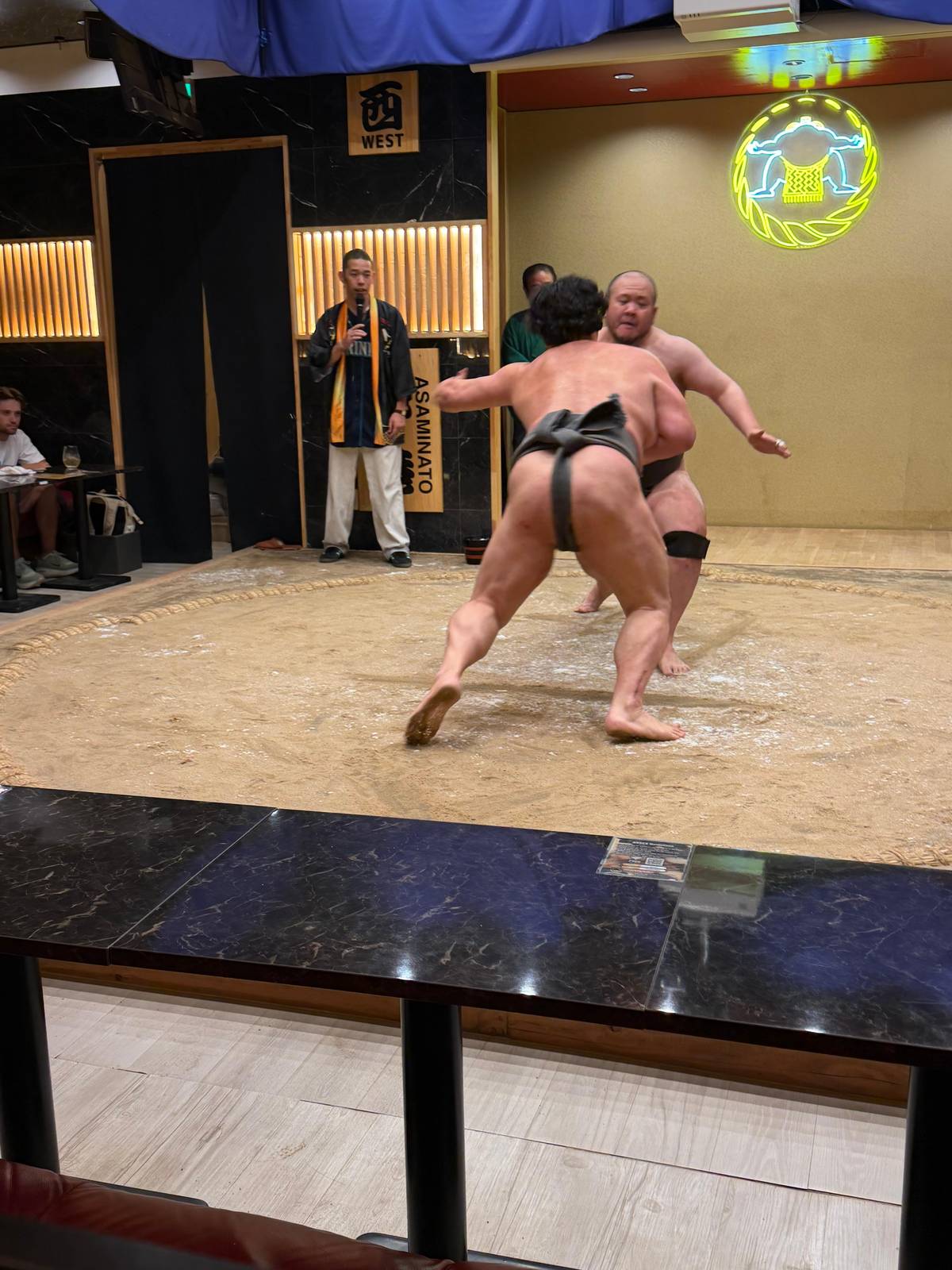
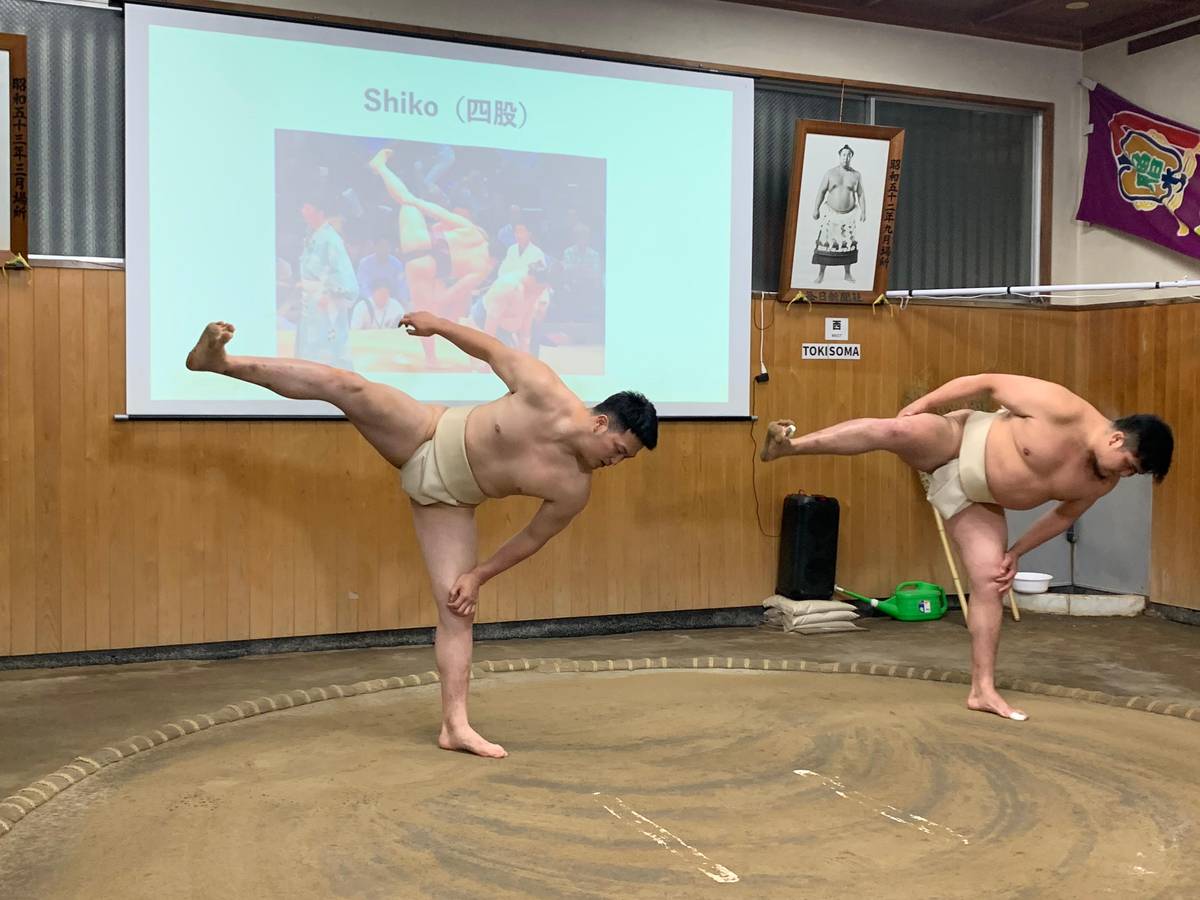
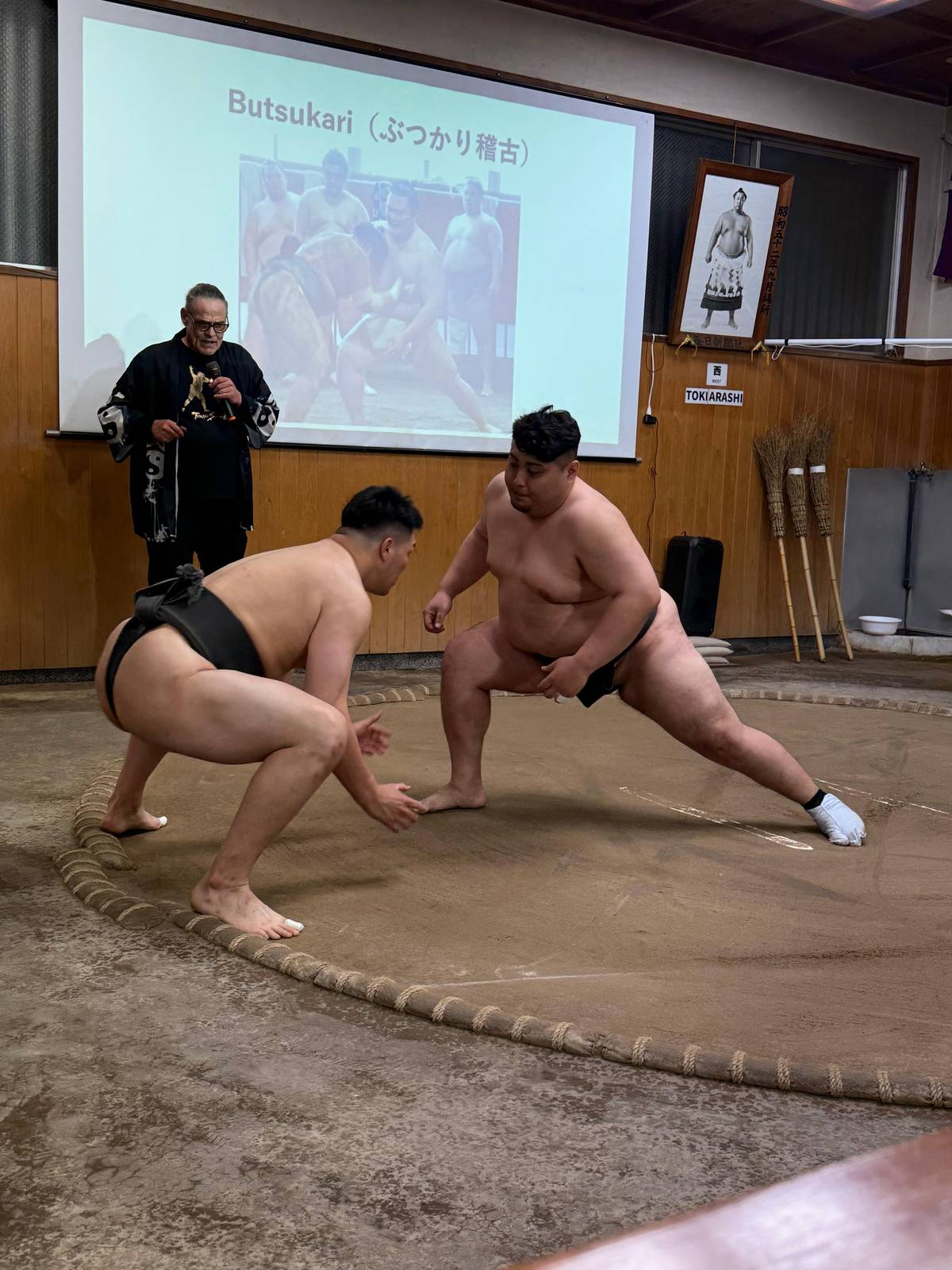
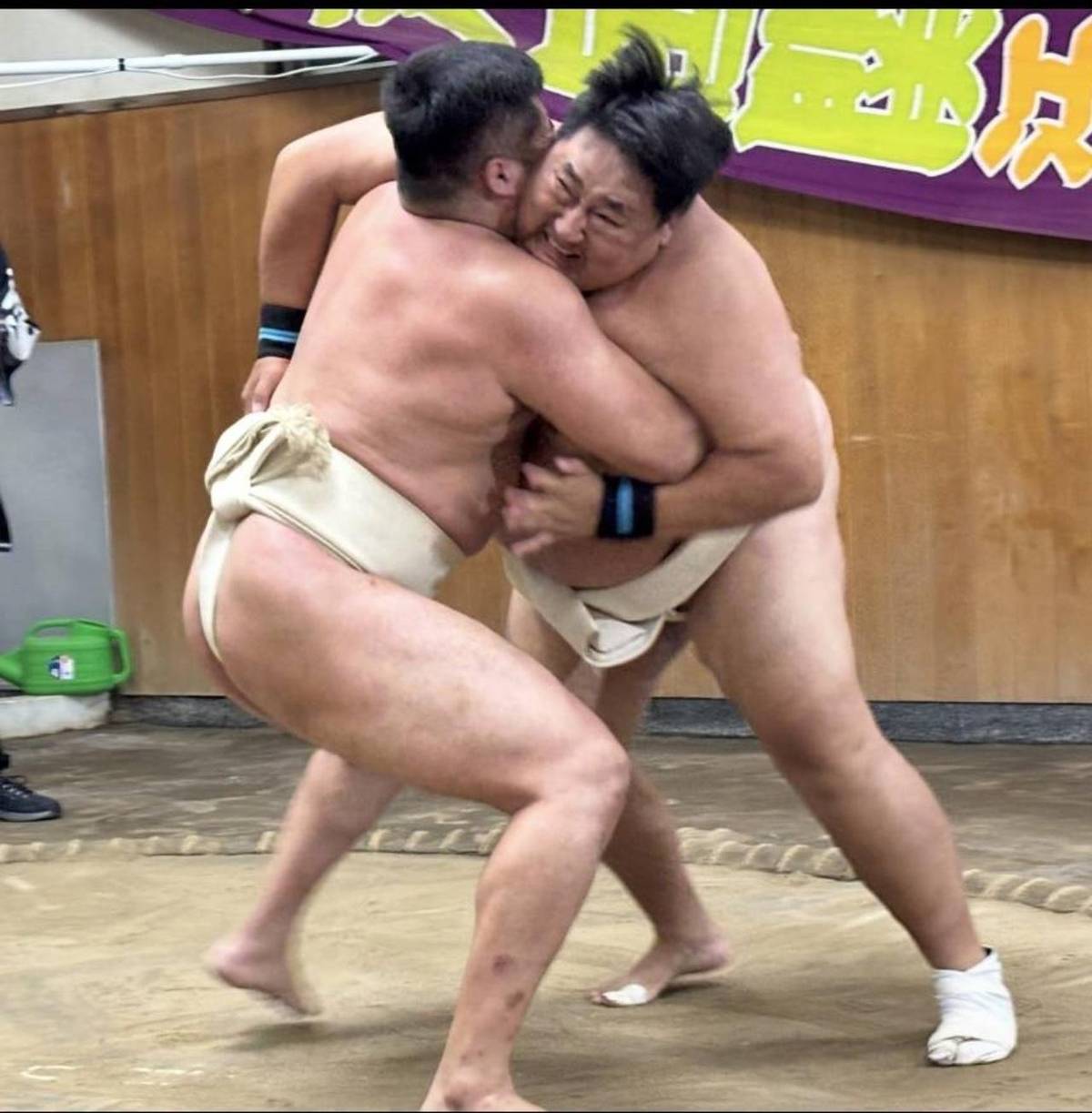
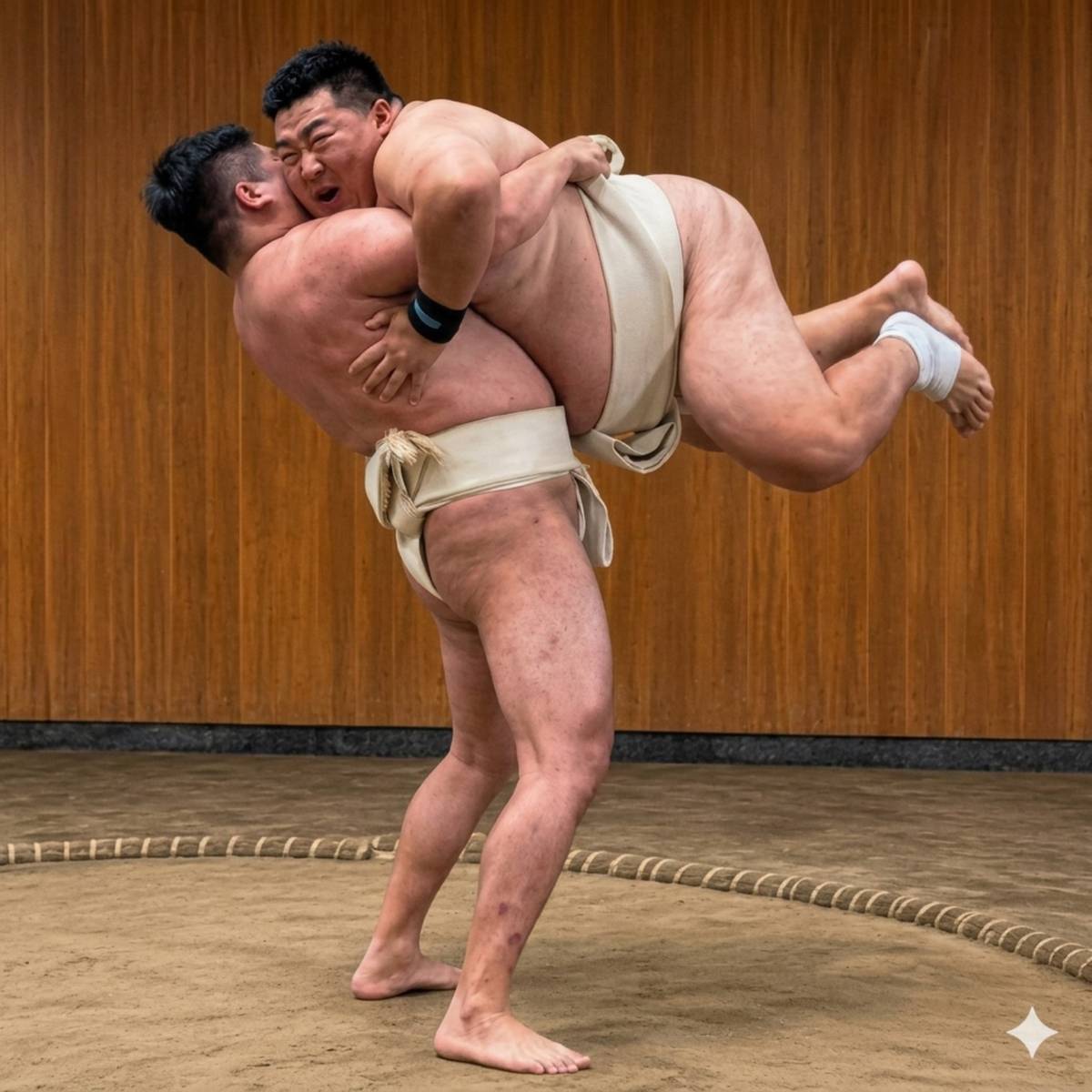
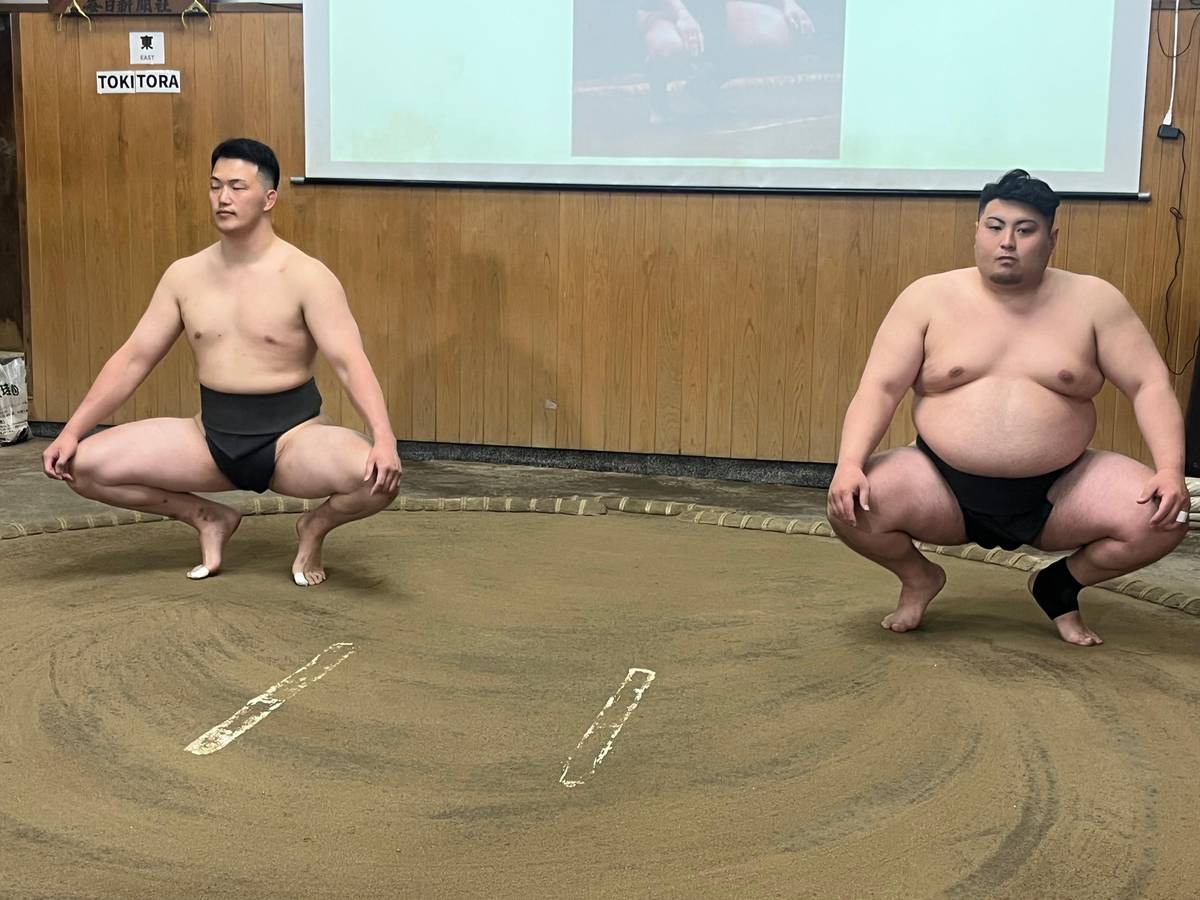
The wrestlers demonstrate the movements that every bout depends on: the high stamping warm-up, the deep crouch and the charge. Then they fight, close enough for you to hear the slap of the first contact. Between bouts the host fills in the history and the rituals, so each clash means more than the last.
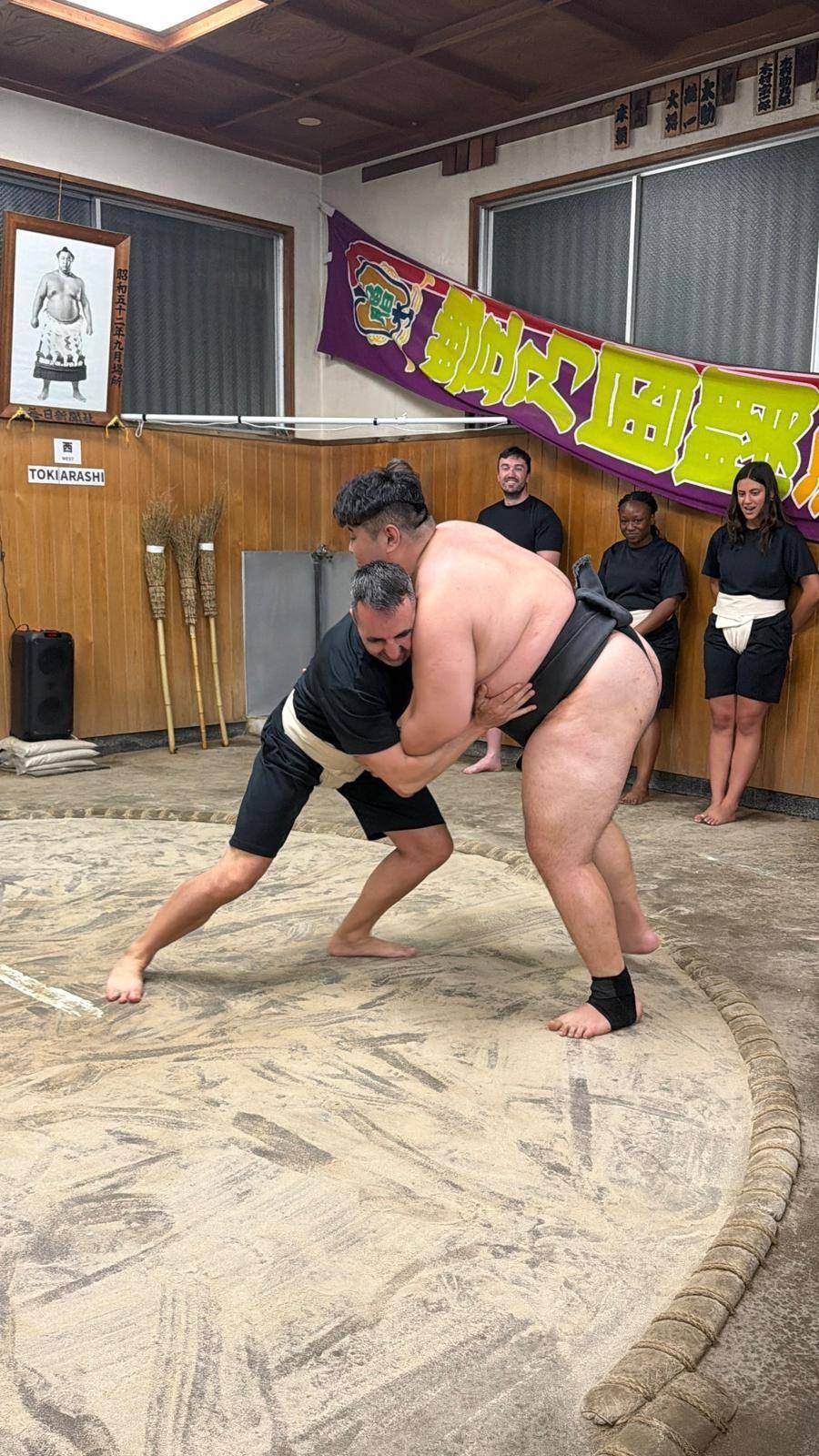
Before the meal comes the part that stays with you: the chance to step into the ring. You can join a training drill or face a wrestler in a challenge match, in front of a cheering room. Nobody has to take part, and watching is just as welcome.
Why this show
Sumo is usually something you watch on a screen. This show puts you in a training hall at Tokyo Sumo Beya, with live bouts, the story of the sport told in English and the chance to step into the ring. It runs 1.5 to 2 hours and holds 4.80 from 3,454 reviews. Book the 11:00 AM or 7:00 PM session and the all-you-can-eat chicken hot pot is part of the evening.
Cancel for free until 24 hours before your show
Insert · a real hall
Not every sumo show in Tokyo takes place in a real hall; some are staged in restaurants or event spaces. This one takes place at Tokyo Sumo Beya, a sumo house on a quiet street in the east of the city, and the setting is a large part of its charm. The ring, the ropes and the portraits give the room the feel of a place where wrestlers actually work.
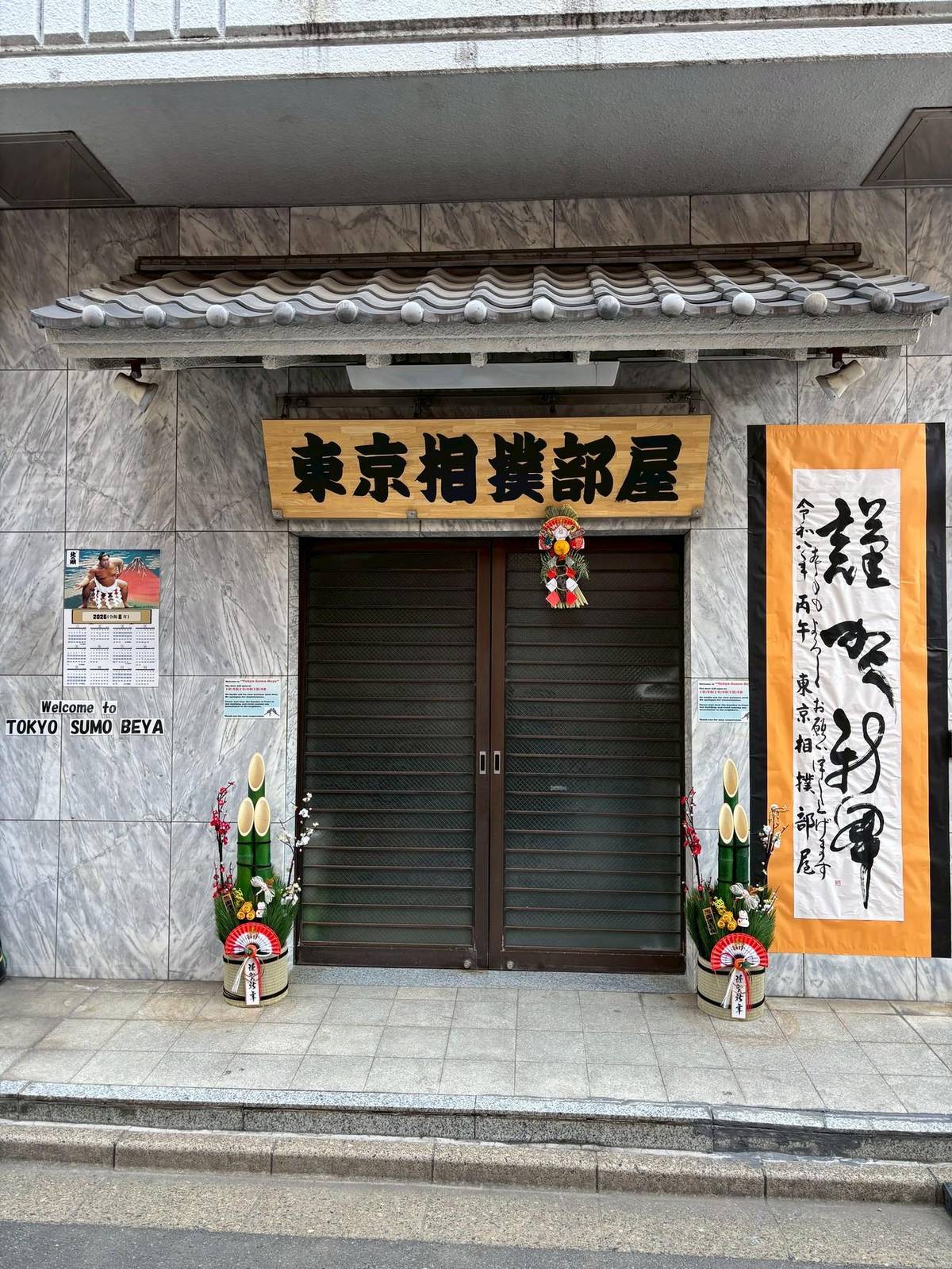
The neighborhood adds to it. Kiyosumi-shirakawa is calm and residential, a short subway ride from the center, and the walk from exit A1 of the station takes about 5 minutes through older streets. Look for the sign at the entrance reading 東京相撲部屋, which is Japanese for Tokyo Sumo Beya.
It is also an accessible venue: the show is listed as wheelchair accessible, which matters if you are traveling with older relatives or a stroller. If anyone in your group has specific needs, mention them when you book so the team can prepare.
Reviews
 5.0
We loved it. The food was far better than we expected, we learned a lot of sumo history, and the wrestlers who fought for us were hilarious. Worth every penny.”
 MirellaJuly 2026, as a couple · GetYourGuide
Verified
 5.0
Great for our family with teenage sons. The guide was friendly and knew the subject, the wrestlers were impressive, and being inside a real sumo stable felt special.”
 DawnJuly 2026, with family · GetYourGuide
Verified
 5.0
A brilliant evening. We learned about the sport's history and how wrestlers live, and we even got to wrestle retired sumo wrestlers ourselves, which I never imagined doing.”
 AnneJuly 2026, as a couple · GetYourGuide
Verified
 5.0
Fun and full of culture. Our whole family, kids included, loved it. The team was warm and welcoming, and the wrestlers had real charisma. I would happily go again.”
 EliJune · GetYourGuide
Verified
 5.0
A must if you visit Japan. The staff helped my mother out of the taxi and called us one afterwards. The show was rich in history and the sumo meal was delicious.”
 PeterMay · GetYourGuide
Verified
 5.0
One of my Tokyo highlights. Our guide explained the history beautifully, I learned so much in a short time, and I loved being able to have seconds of the meal.”
 ThuyJune · GetYourGuide
Verified
Insert · guests say
Read the recent reviews and three things come up again and again. The first is the food: guests call the chicken hot pot delicious and generous, and several were surprised by how good it was. Going back for a second bowl is a recurring theme, and at the meal sessions it is all-you-can-eat.
The second is the host. Guests describe a presenter who is informative, friendly and funny, and say they learned far more about the history of sumo and the daily life of wrestlers than they expected. The explanation turns the bouts from a spectacle into something you understand.
The third is taking part. Reviews mention the thrill of facing a wrestler, the humor of the wrestlers themselves and the warmth of the staff, including families with teenagers who say everyone was entertained. A few guests note that the venue takes a little finding, so leave a few spare minutes.
Compare
Tokyo, more of it
Other good options around Tokyo, live on GetYourGuide with free cancellation.
From Tokyo · 2 hrs
from $102
View tour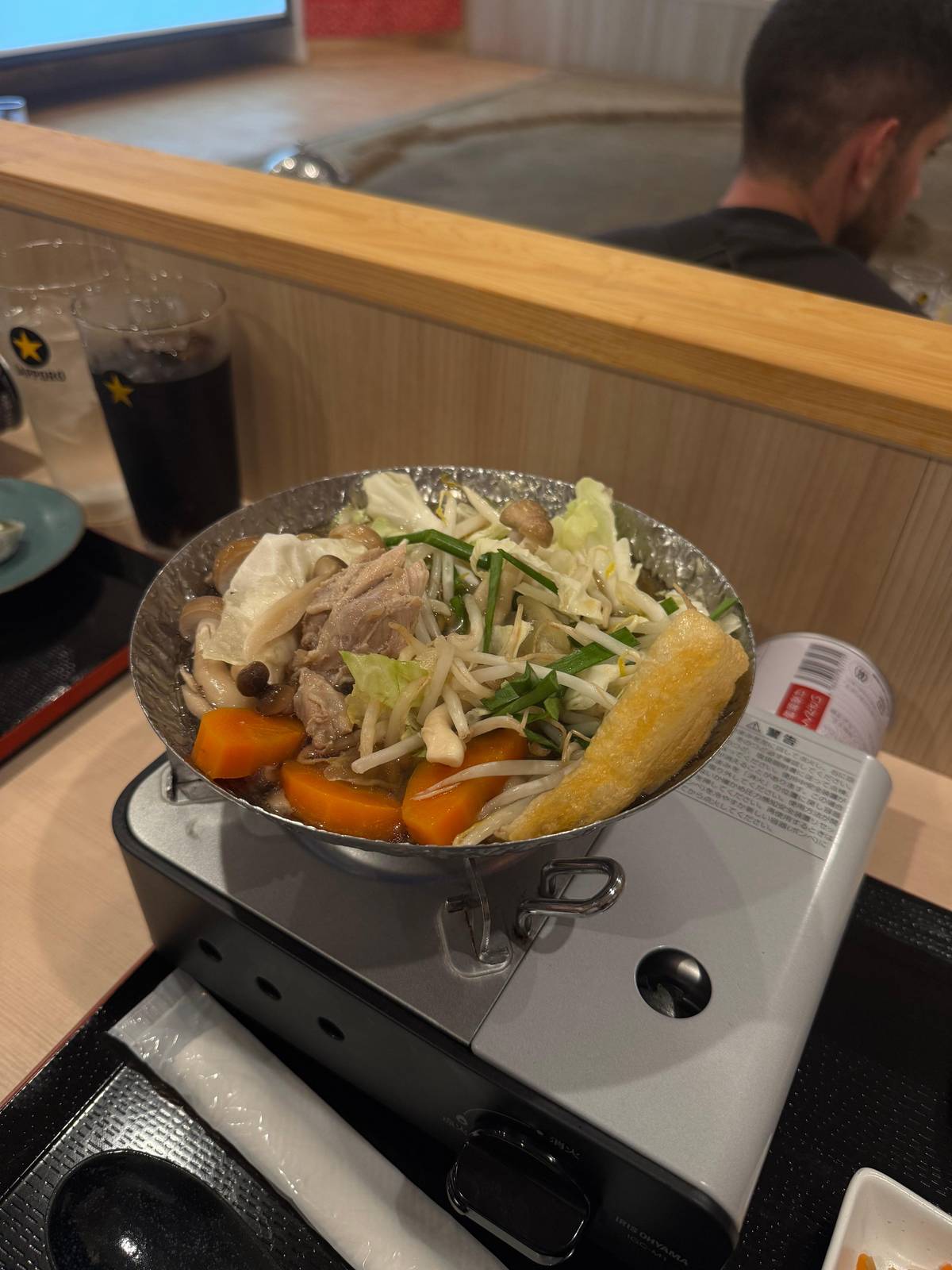
From Tokyo · 2 hrs
from $102
View tour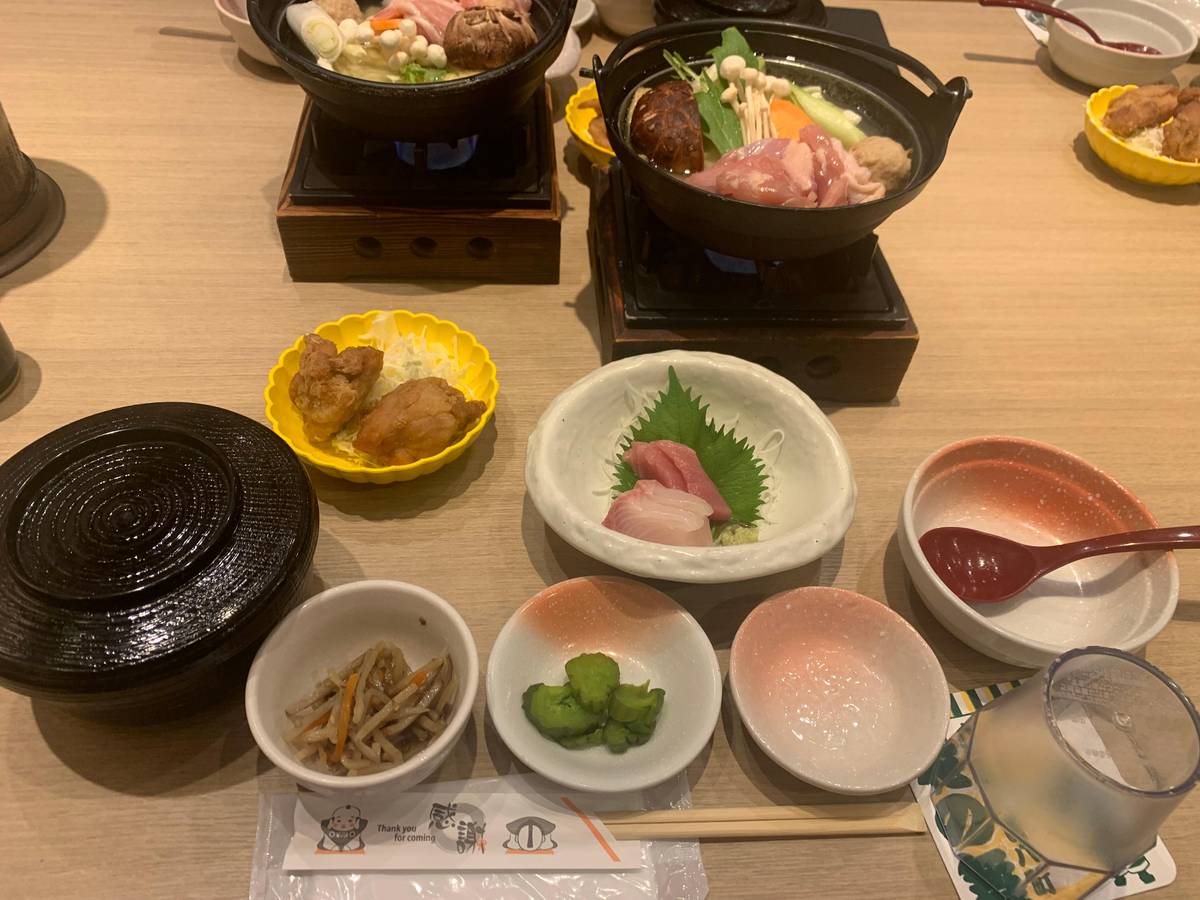
From Tokyo · 2 hrs
from $63
View tour
From Tokyo · 3 hrs
from $74
View tour
From Tokyo · 30 min
from $2,865
View tourInsert · the meal
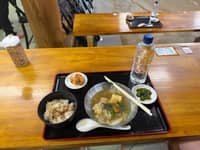
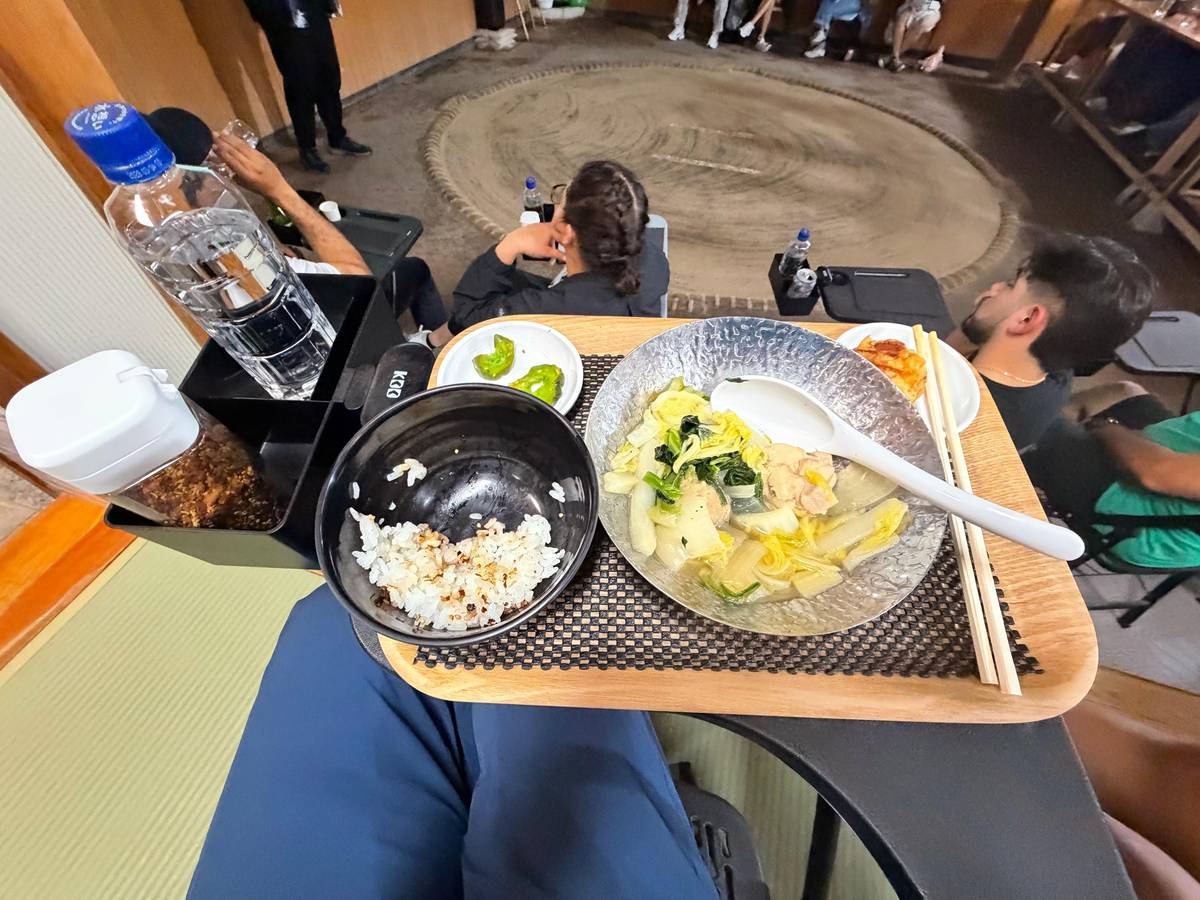
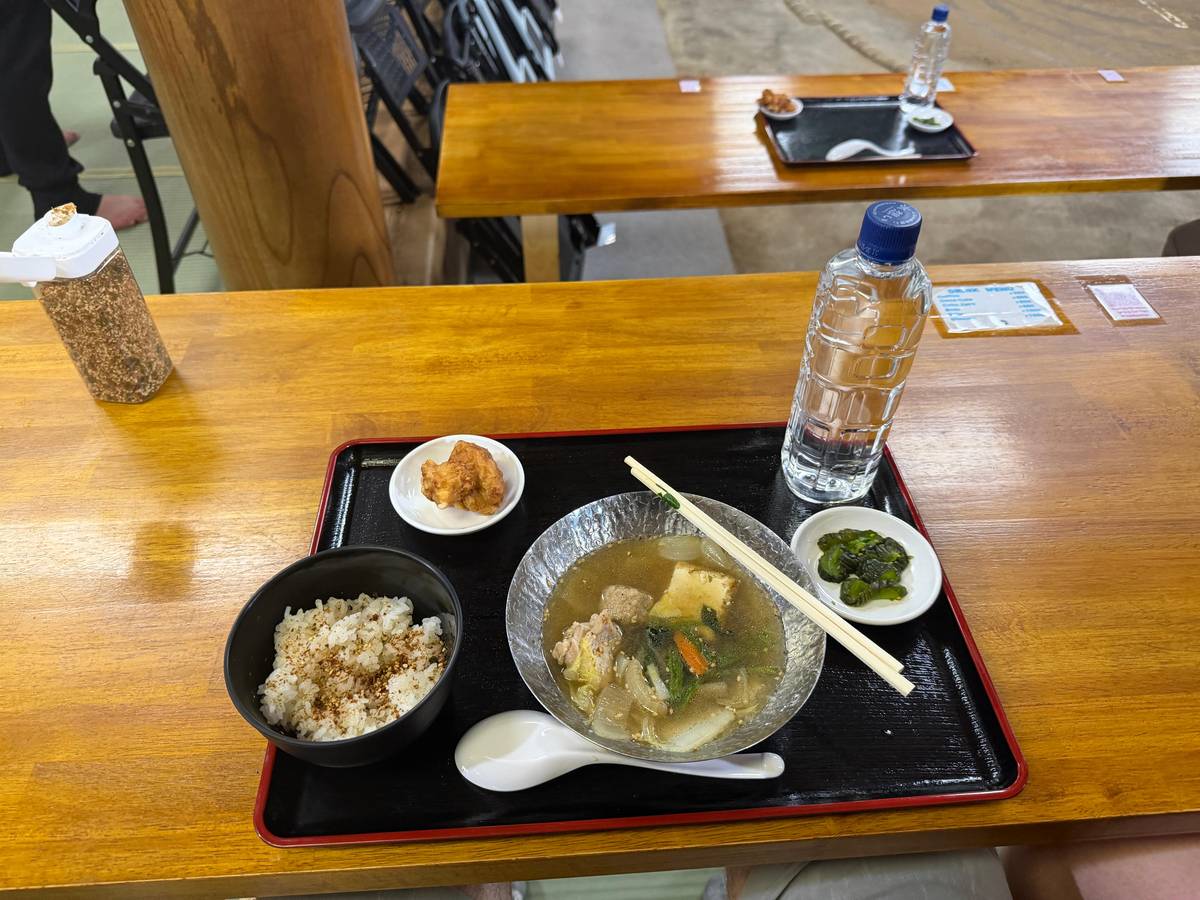
Chanko nabe is the hot pot of the sumo world, and in Tokyo the sumo-style version is a dish of its own. It is a big shared pot of broth with chicken, vegetables and tofu, simmered at the table and built for hungry people. At this show it arrives after the bouts, when you have earned it.
The meal belongs to the 11:00 AM and 7:00 PM sessions, where the chicken hot pot is all-you-can-eat and comes with bottled water. The 8:30 AM and 3:00 PM sessions have no meal, so if dinner or lunch is part of your plan, choose your time accordingly. Alcohol and soft drinks cost extra.
Vegetarians are covered too: a vegetarian option is available on request and can even be changed on the day of your visit. If you have an allergy, mention it when you book, and ask on arrival so the staff know before the pot reaches your table.
Gallery
Insert · the rituals
Sumo is as much ceremony as combat, and the host walks you through it. Before each bout, wrestlers throw salt into the ring as a purification ritual, meant to ward off evil spirits and ask for a blessing and a bout without injury. Once you know that, you will notice every handful.
The rules of the bout are refreshingly simple. The first wrestler to step out of the ring or touch the ground with any part of the body other than the soles of the feet loses. The ring is 4.55 meters across, so a single powerful charge can end it in seconds.
Rank shapes everything in sumo. The highest rank is yokozuna, and professional sumo has six divisions, from Makuuchi at the top down to Jonokuchi. The host puts these names into context, so that by the end of the evening you could follow a tournament broadcast with real understanding.
Book your seat
Reserve now, pay later, and cancel for free up to 24 hours before the show.
Insert · your turn
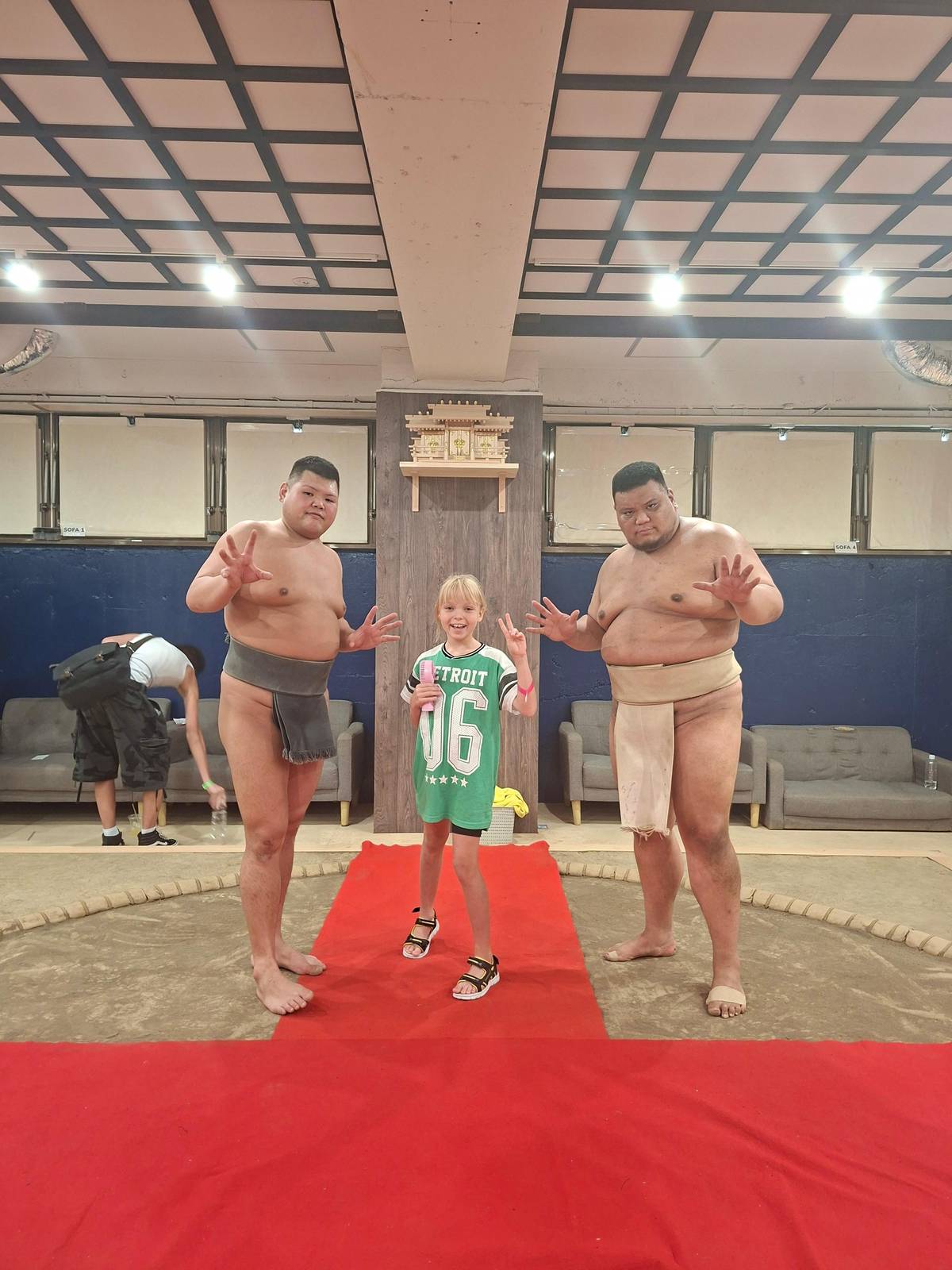
Watching a wrestler charge is one thing; feeling it is another. At this show, guests have the opportunity to join an authentic sumo training drill or a challenge match. It is optional and light-hearted, a story to take home for anyone from teenagers to grandparents.
You do not need any experience, and the room cheers every attempt, successful or not. Wear clothes you can move in, take off anything loose, and let the wrestlers guide you. The photos from this moment make great souvenirs.
If you would rather stay in your seat, that is just as normal. Watching friends or family try to move a professional athlete a single step is entertainment of its own, and it gives you a sense of the strength and balance the sport demands.
Weather
NOAA station Tokyo, 1971 to 2020 average: daylight, temperature and wet days, with the Tokyo tournament months.NOAA station Tokyo, 1971 to 2020 average: daylight, temperature and wet days, with the Tokyo tournament months.
Insert · the sessions
The show runs at several times of day, and the choice matters. The 11:00 AM session includes the chicken hot pot and makes an excellent long lunch, ideal with children or before an afternoon of sightseeing in the east of the city. The 7:00 PM session also includes the meal and turns the show into a dinner outing.
The 8:30 AM and 3:00 PM sessions come without food. They suit travelers who have already eaten, who want to fit the show between other plans, or who are heading to a restaurant afterwards. The show itself, with the bouts, the host and the chance to take part, is the same.
Whatever you choose, plan about 1.5 to 2 hours for the show, plus your travel time. Transport to the venue is not included, so look up your route to Kiyosumi-shirakawa station in advance and leave a few spare minutes for the walk from exit A1.
The ring
The whole contest happens in a ring 4.55 meters across.
Lose your footing or step over the edge, and the bout is over. At this show you sit right beside that small circle of clay, close enough to feel how fast it can be decided.
Insert · in english
Language is often the barrier that keeps visitors at a distance from Japanese traditions. Here it is removed: an English-speaking MC explains the history of sumo, the meaning of each ritual and what the wrestlers are doing, all in plain English. You do not need any prior knowledge to follow the evening.
The explanation is what lifts the show above a simple display of strength. You learn how wrestlers live, why they eat chanko, what the ranks mean and how a bout is won. By the end, the gestures that looked strange at the start, the salt, the stamping, the long stares, all make sense.
That makes this show a good first step before seeing sumo anywhere else in Japan. Watch a tournament on television afterwards, or visit the arena during a tournament, and you will recognize what is happening and why it matters to the people in the hall.
The practical part
Insert · more sumo
If the evening leaves you wanting more sumo in Tokyo, the city has plenty. Three of the six yearly grand tournaments are held in Tokyo, in January, May and September. The next one runs from January 10 to January 24, 2027, at the Kokugikan in Ryogoku. Advance tickets for it go on sale on December 5, 2026.
Outside tournament weeks, the Sumo Museum at the Kokugikan is free to enter. The arena is a one-minute walk from JR Ryogoku Station, and the area around it is full of chanko restaurants and reminders of the sport. It pairs well with this show on a sumo-themed day in the east of the city.
For the real daily routine, guided morning practice visits take you inside a working stable to watch wrestlers train. Seeing the sport in training after watching it on show is a good way to understand both.
1.5 to 2 hours. The listing gives a length of 1.5 to 2 hours for the show.
The 11:00 AM and 7:00 PM shows. Both include an all-you-can-eat chicken hot pot with bottled water; the 8:30 AM and 3:00 PM shows have no meal.
Yes. An English-speaking MC explains the history of sumo and each part of the show.
Yes, if you want to. Guests can join an authentic sumo training drill or a challenge match.
Yes, on request. It can also be changed on the day of your visit.
At Tokyo Sumo Beya, Kiyosumi-shirakawa. It is a 5-minute walk from exit A1 of Kiyosumi-shirakawa subway station; the sign reads 東京相撲部屋.
Water is, drinks and transport are not. Alcohol and soft drinks cost extra, and you make your own way to the venue.
Yes. The show is listed as wheelchair accessible.
Only in January, May or September. Those are the Tokyo tournament months; the next runs January 10 to 24, 2027.
Cancel for free up to 24 hours ahead. You can also reserve now and pay later, so your plans stay flexible.
Insert · near the venue
The neighborhood around the venue is worth a little time of its own. Its best-known sight is Kiyosumi Gardens, a fine example of a Japanese strolling-style landscape garden, with seasonal flowers and black pines around a large pond. A quiet walk there is a perfect counterpoint to the noise of the ring.
The streets nearby are calm and residential, with small cafés and shops that feel far from the bustle of Shinjuku or Shibuya. Arriving a little early lets you explore at an easy pace and find the venue without hurry.
If you book the 11:00 AM session, the garden makes an ideal afternoon after your hot pot lunch. With the 7:00 PM session, a walk before the show gets the evening off to a calm start, and the subway takes you back to the center afterwards.
Book with free cancellation →Book now
Live prices from GetYourGuide, the same as on their site, we type nothing in.
Frequently fully booked 6 days in advance
Insert · who it suits
This show suits first-time visitors to Japan who are curious about sumo, families with children of almost any age, couples looking for an unusual evening and solo travelers happy to share a table. It packs history, live bouts, participation and, at the meal sessions, a generous hot pot into one booking.
It suits people less well if they want real competition between ranked wrestlers; for that, plan your trip around a Tokyo tournament. It is also a group experience rather than a private tour, so if you want a personal guide, a morning practice visit is the better fit.
Finally, keep the practical points in mind: transport and drinks other than water are not included, the 8:30 AM and 3:00 PM sessions have no meal, and the venue sits on a side street. Plan for those, and remember that a booking stays free to cancel until 24 hours before the show.
The rating
Excellent
4.8
3,454 verified reviews on GetYourGuide
The split comes from the 39 newest reviews we hold; GetYourGuide puts the best at the top. All 3,454 reviews together give 4.8.
Before you go
Reserve now and pay later, then cancel for free up to 24 hours before the show if your plans change. Check the session times live.
Frequently fully booked 6 days in advance