 Most reviewed
Guides
Language
EnglishCurrency
US dollar · $GetYourGuide uses the currency you choose.
Guide · Practice
Sumo practice in Tokyo: a morning inside a stable
Tournaments last only a few weeks a year, but the stables train almost every morning. Here is how to watch sumo practice in Tokyo with a guide, what you will see and how to behave in the room.
Check availabilityfrom $90 · cancel without a fee
Editorial team, sumodinnershowtokyo.comUpdated October 5, 2026read in 6 minutes6 sources
Quick answer
- 01What it is
- Wrestlers training in their own stable, not a show staged for guests.
- 02How to go
- With a guided tour; a guide trained in the etiquette makes the visit possible.1
- 03Typical tour
- A ring-side practice tour runs 2 hours from $96.
- 04Highest rated
- A visit with journalists scores 4.89 from 236 reviews.
- 05Prefer a show?
- The chanko show adds a host, bouts and a hot pot, from $90.
What a sumo stable is
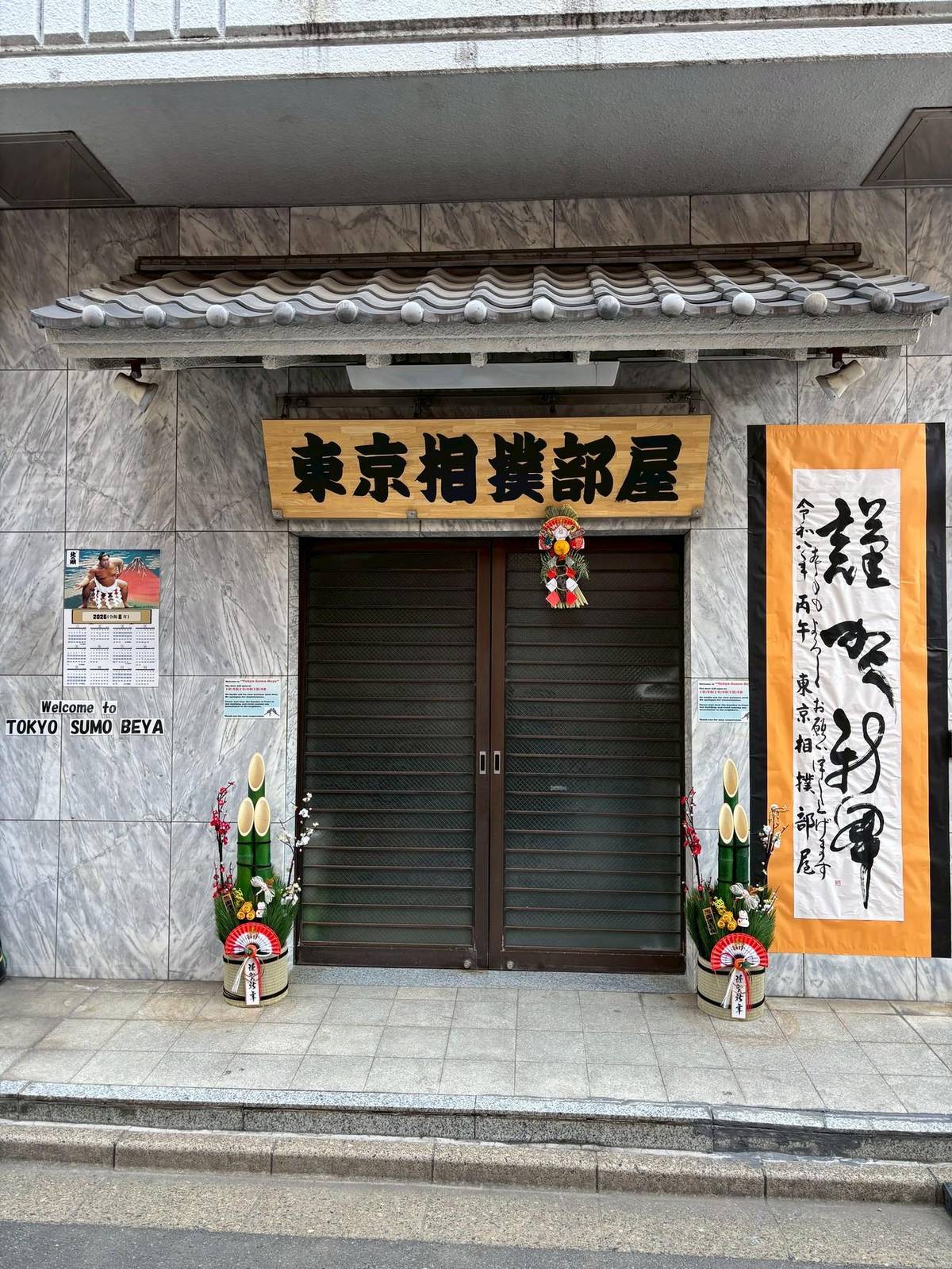
Every professional wrestler belongs to a stable, called a heya: a training house run by a retired wrestler where the men live, eat and practice together. A sumo stable in Tokyo looks unremarkable from the street, often a plain building with a nameplate at the door, but inside there is a clay ring, a raised platform for visitors and the smell of the sand. Many of the stables are gathered on the east side of the city, around Ryogoku.
Life in a stable follows a strict rhythm. The younger wrestlers rise first, train hardest and handle chores such as cooking, while senior wrestlers arrive later. Rank decides almost everything, from who trains with whom to who eats first. Professional sumo has six divisions, from Makuuchi at the top to Jonokuchi at the bottom, and a single stable can hold wrestlers from several of them.2
Watching sumo practice in Tokyo means stepping into that daily routine. Nothing is staged and nothing is explained by the wrestlers, who are working, not performing. That is the attraction and also the reason a visit needs care: you are a guest in someone's workplace, and the visit only works if you fit quietly into it.
A practice morning
What you see, in order
-
Arrival
Find your place
Your guide seats you on the visitors' platform beside the ring.
-
Warm-up
Shiko and stretching
Wrestlers raise and stamp each leg again and again.
-
Drills
Pushes and footwork
Short explosive moves that build the first charge.
-
Bouts
Winner stays on
Wrestlers fight in turn, the winner taking on the next.
-
Butsukari
The hardest drill
One wrestler charges, another absorbs the impact, repeatedly.
-
Close
A quiet exit
Thank your hosts and leave the way your guide shows you.
What happens during a morning practice
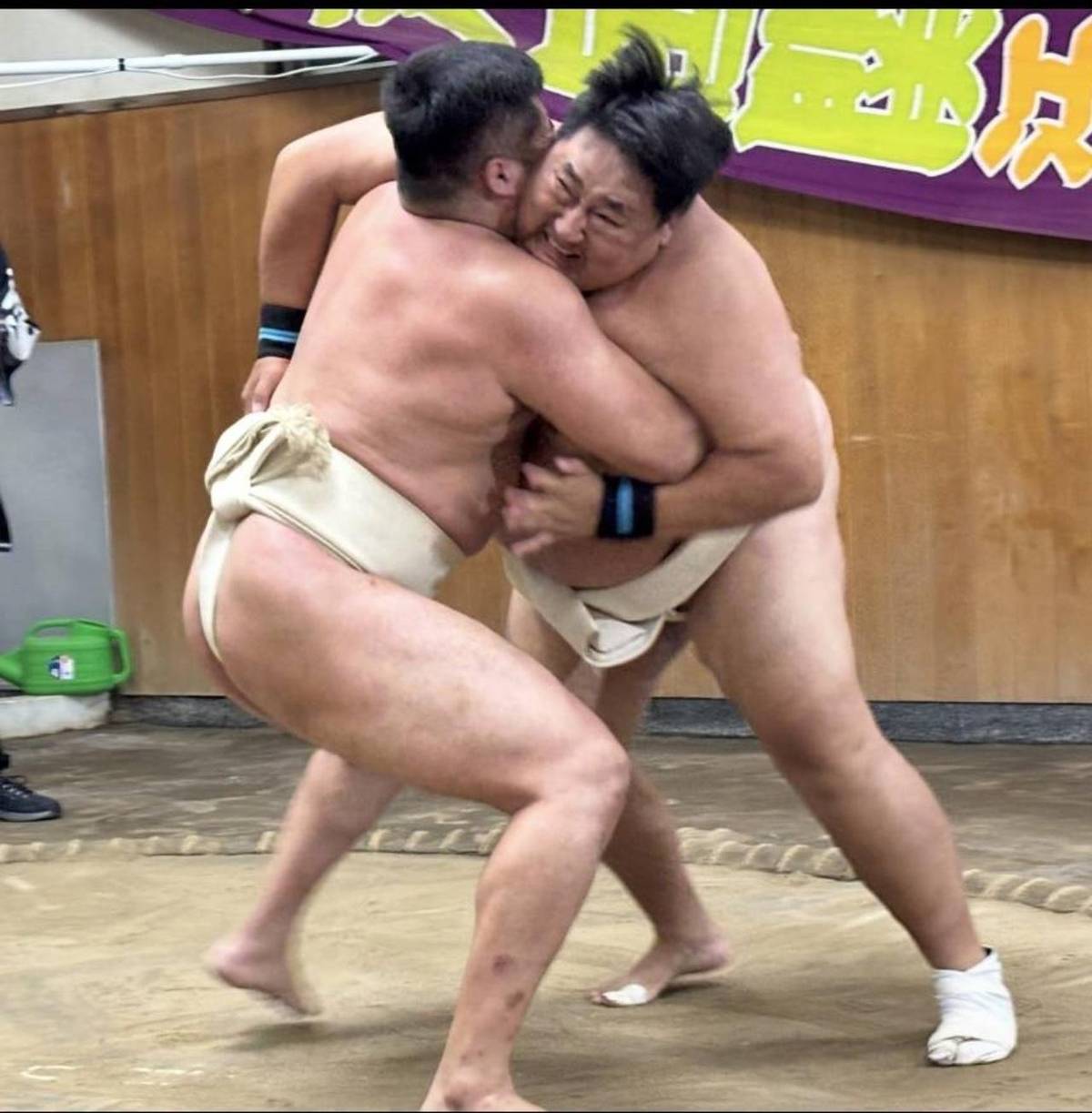
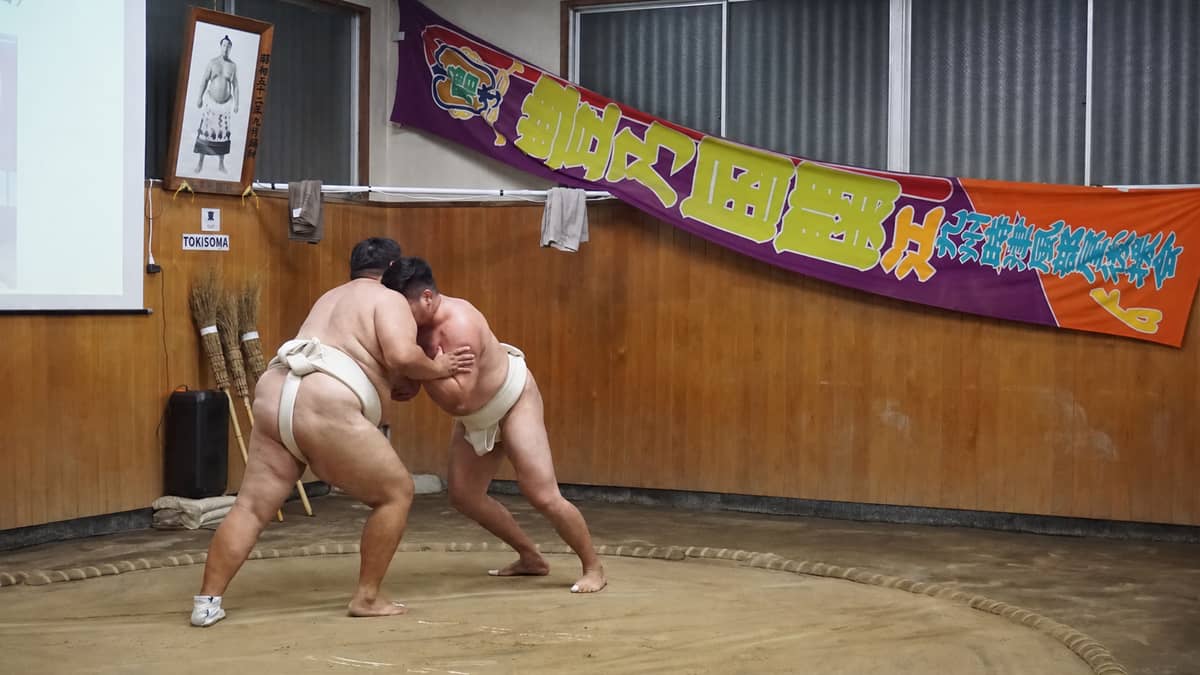
Practice usually starts with stretching and the leg-raising stomp called shiko, repeated until the wrestlers' thighs shake. Then come the squats, the pushes against a wooden pillar and the drills that build the explosive first step. The pace is slow at first and the room is quiet apart from breathing, stamping and short instructions from the senior men.
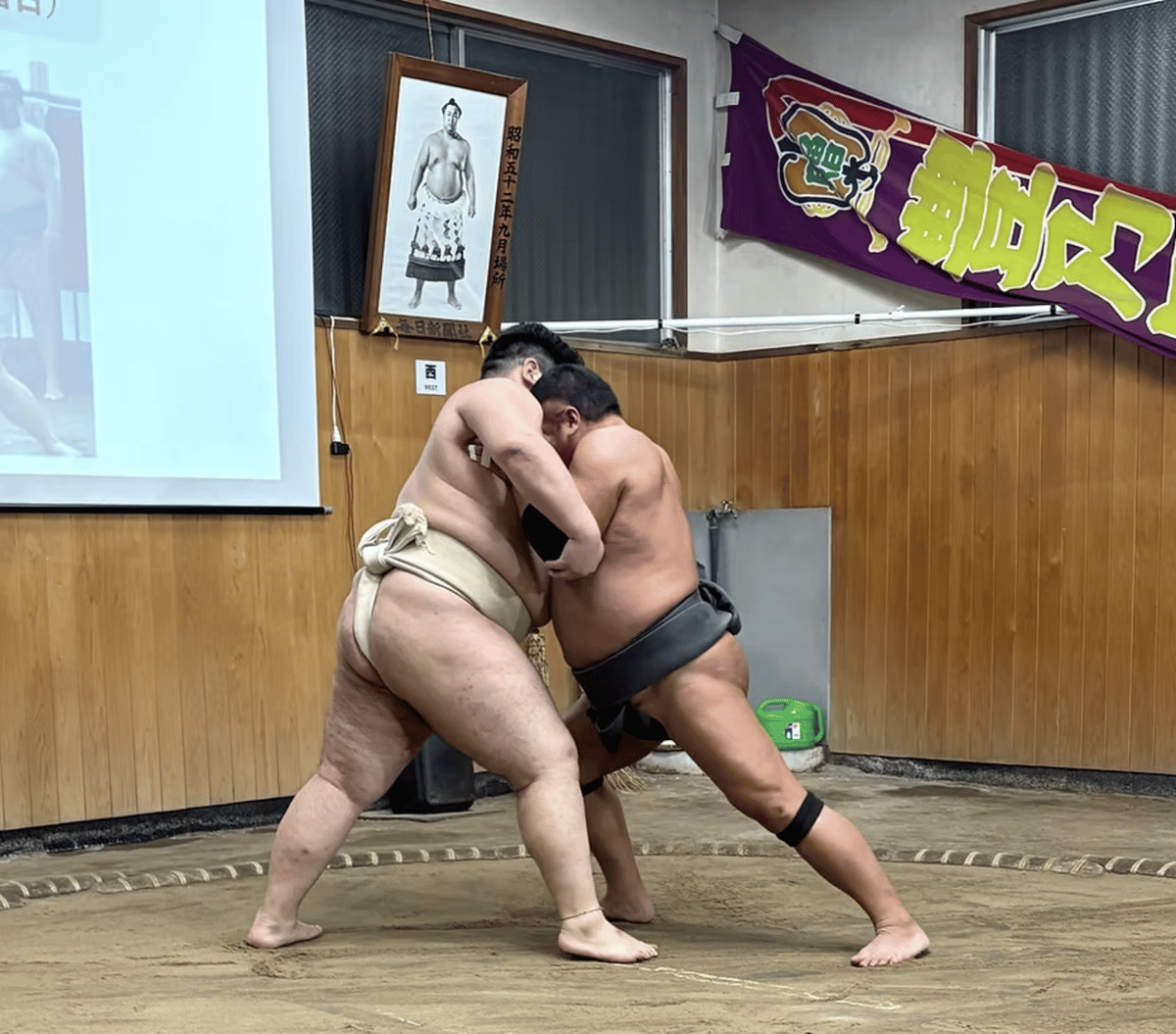
The core of the morning is bouts. Wrestlers face off again and again, the winner staying in the ring to take on the next challenger. Then comes butsukari, a punishing drill in which one wrestler charges into another who absorbs the impact, over and over. The ring is 4.55 meters across, so every charge happens within a few steps of where you are sitting.3
There is no commentary, and that is the point. You see the effort that never reaches television: the repetition, the exhaustion and the small corrections from the coach. It is memorable precisely because it is ordinary for the people doing it.
Guest ratings
How guests rate sumo practice tours
rating
Practice tours compared
Guided sumo practice visits in Tokyo
| Tour | Length | Rating | Price |
|---|---|---|---|
| Ring-side seat and photos | 2 hrs | 4.81 | from $96 |
| Practice with English guide | 2 hrs | 4.70 | from $96 |
| Practice with journalists | 3 hrs | 4.89 | from $95 |
| Near Tokyo Skytree | 2 hrs | 4.78 | from $103 |
| Practice with experts | 3 hrs | 4.84 | from $90 |
Starting prices and guest ratings out of 5 as listed on GetYourGuide.
Three ways in
Practice visit, longer tour or show
Most reviewed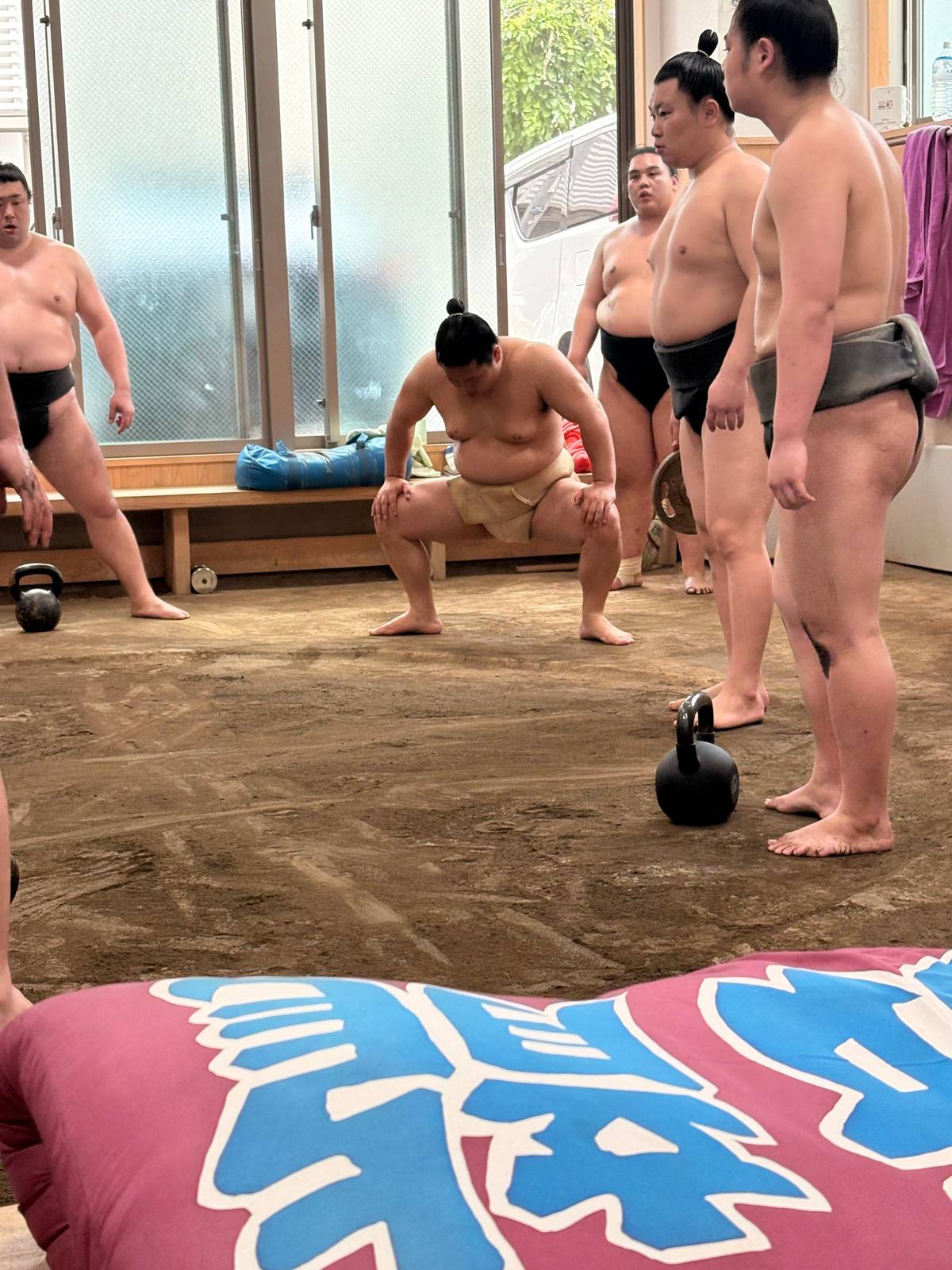 Top rated
 This site
Decision helper
Practice visit or show?
Choose what you want from the morning
Practice with English guide
Rated 4.70 from 398 reviews.
Practice with journalists
3 hours with a stable visit and Ryōgoku Edo NOREN.
Ring-side practice tour
2 hours, small group of at most 10.
The chanko show
Narrated, lively and you may take part.
The chanko show
A hot pot comes with the 11:00 AM and 7:00 PM sessions.
Taking a private tour means a guide trained in the proper protocols will interpret and help you navigate a world steeped in etiquette.
Going with a guide
Most stables do not simply open their doors to anyone who turns up. A guided tour solves that problem: a guide trained in the proper protocols will interpret what you see and help you navigate a world steeped in etiquette.1 The guide also arranges the visit with the stable, which is the part you could not easily do yourself.
A practice tour with a ring-side seat and a photoshoot runs 2 hours from $96 and is rated 4.81 from 129 reviews, in a small group of at most 10 with a live guide in English. Another visit includes the Takasago-beya Sumo Stable, runs 2 hours from $96 and holds 4.70 from 398 reviews, with guides in English and Japanese.
A longer format combines practice with journalists who explain the sport, a stop at the Takasago-beya Sumo Stable and Ryōgoku Edo NOREN, over 3 hours from $95. It is the highest rated in this comparison, 4.89 from 236 reviews. If you want depth rather than just a look, it is the one to consider.
Checklist
For a morning in a stable
01
Bring
- Loose clothes you can sit in for a long time
- Socks if you prefer not to be barefoot
- A small breakfast beforehand
02
In the room
- Follow every instruction from your guide
- No flash, phone on silent
- Stay in your seat and keep off the ring
Cost calculator
A practice visit for your group
Enter your group size and compare the totals.
People
Total from$191
per person from $96
Check availabilityfree cancellationStarting prices per GetYourGuide, at the European Central Bank reference rate. What it costs exactly, the booking shows you.
Video
A day in the lives of sumo wrestlers
The video starts loading once you tap play.
Etiquette in the practice room
Behave the way you would in a stranger's home during their working day. Arrive on time, keep your voice down, and follow every instruction your guide gives, from where to sit to when you may take pictures. Sit where you are placed and stay there; wandering, chatting or stretching your legs toward the ring distracts the wrestlers and can embarrass your guide.
Photography rules differ from stable to stable, so ask before you lift your phone, and never use a flash. Silence your phone completely. Do not touch the ring, the wrestlers or their equipment, and do not try to talk to the wrestlers during practice. If someone senior speaks to you afterwards, a polite bow and a thank you go a long way.
Sitting still on a low platform for a long session is harder than it sounds. Wear loose clothing, bring socks if you prefer not to be barefoot, and eat something beforehand, since you will not want to leave the room once practice has begun. Leave large bags at your hotel. A small effort here makes the morning smoother for everyone in the room.
Choosing a practice tour
Start with the location. Several tours here visit stables around Ryogoku and the Takasago-beya Sumo Stable, while one starts near Tokyo Skytree Town. That one runs 2 hours from $103 and is rated 4.78 from 313 reviews, but it can be canceled for free only up to 2 days ahead. Check that difference before you book if your plans are still shifting.
A visit billed as a professional practice with experts, not a show, runs 3 hours from $90, rated 4.84 from 77 reviews, with guides in English and Japanese. Guests score its guide 4.9 and its value for money 4.6, so it suits you if you want the training explained step by step rather than simply watched.
Ratings in this group are close together, so the practical details matter more than a tenth of a point: where you meet, how long you sit, whether the guide speaks your language, and the cancellation terms. All of these are stated in each listing, and the cost calculator below compares the totals for your group.
Turning a sumo stable visit into a Ryogoku morning
A morning at a stable leaves the rest of the day free, and the neighborhood around the stables is the obvious place to spend it. The Ryogoku Kokugikan is a one-minute walk from JR Ryogoku Station on the Sobu Line and a five-minute walk from exit A4 of the Toei Oedo Line.4 Inside, the Sumo Museum is free to enter outside tournament days.5
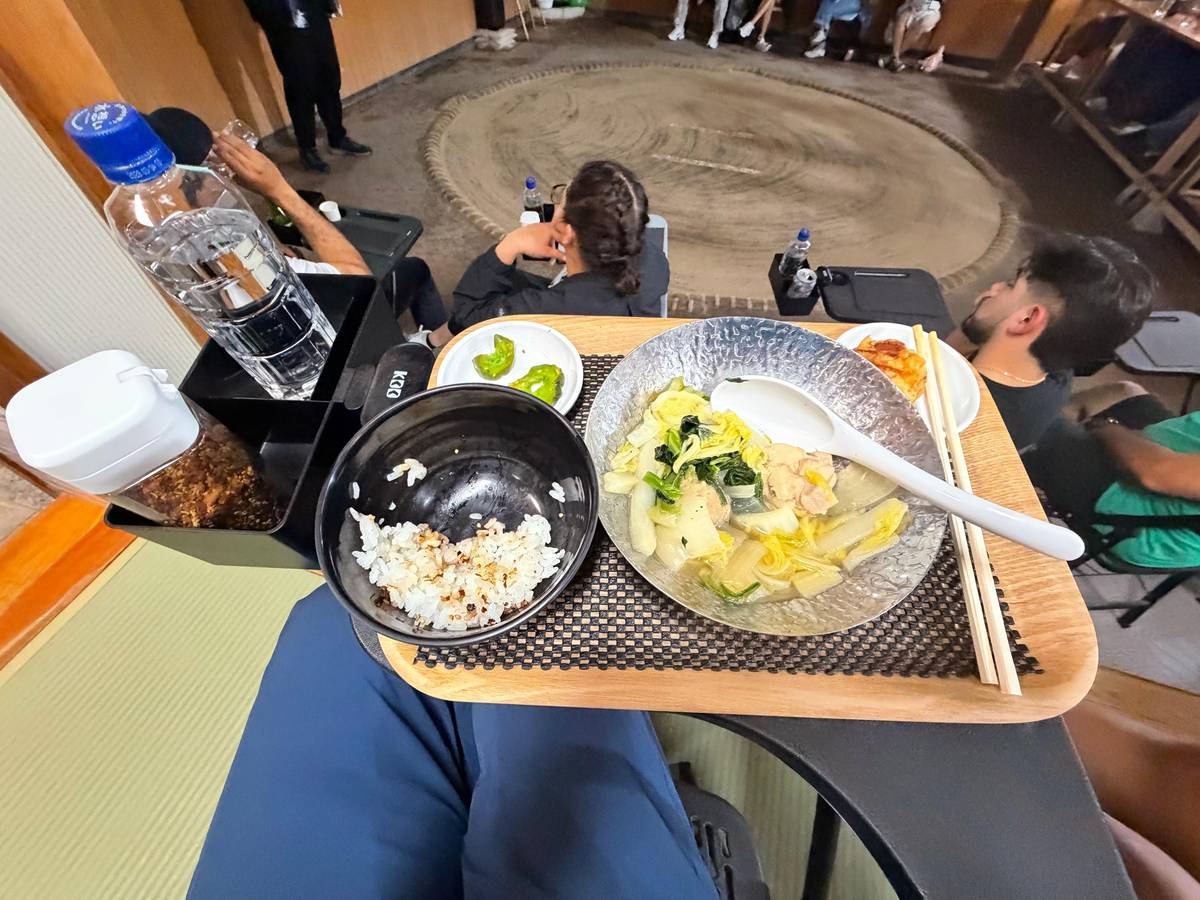
Hungry after watching the wrestlers work? The natural follow-up is a pot of chanko. Chanko Kirishima sits two minutes on foot from the Kokugikan, in an eight-story building, serving a recipe developed by a former sumo wrestler.6 Eating the same kind of food the men you just watched will eat is a fitting end to the morning.
If you still have energy, walk the streets around the station and look for the details that give the area its sumo character: banners, handprints and restaurants named after the sport. Then head back to your hotel for a rest, or continue to a show in the evening if you want to see bouts again, this time up close and explained.
Practice, show or both?
Practice is authentic but quiet, early and unexplained by the wrestlers themselves. A show is staged but close, lively and narrated. At the show on this site, an English-speaking host explains the history of sumo between bouts, guests may join a training drill or a challenge match, and the 11:00 AM and 7:00 PM sessions include an all-you-can-eat chicken hot pot.
If you have only one morning and want to see the real thing, choose practice. If you are traveling with children who may struggle to sit silently, or you want to ask questions and try a move yourself, the show is the easier and more relaxed choice. It runs 1.5 to 2 hours from $90 and is rated 4.80 from 3,454 reviews.
Doing both makes each better. Watch practice first and you will recognize the drills when the show demonstrates them; see the show first and you will understand what the silent wrestlers in the stable are working toward. Either way, you leave with a far clearer picture of the sport than a highlight reel can give.
Book your seat
Ringside bouts and a hot pot are waiting tonight.
Reserve now, pay later, and cancel for free up to 24 hours before the show.


You ask,we answer.
Can I watch sumo practice in Tokyo without a tour?
It is far easier with a guide. A guide trained in the protocols arranges the visit and helps you follow the etiquette.1
How long does a practice visit take?
Usually about 2 hours. A typical viewing tour runs 2 hours; a version with journalists lasts 3 hours.
What does a practice tour cost?
From about $90. Tours in this comparison start between $90 and $103.
Can I take photos inside a sumo stable?
Only when allowed. Rules differ by stable, so ask your guide first and never use a flash.
Is practice suitable for children?
For calm children, yes. You sit quietly for a long time, and some tours set a minimum age, so check it in the listing before you book. Restless children may enjoy a show more.
Which practice tour is wheelchair accessible?
None reliably. The visit with journalists carries a wheelchair badge, but its own notes say the stable's traditional setup does not suit wheelchair users.
Can I take part in the training?
Not at a real practice. You watch; to try a drill or a bout yourself, choose a show such as the chanko show on this site.
Sources
What this text is based on
- 1Japan National Tourism OrganizationWatch Sumo Wrestling Practice↩
- 2Nihon Sumo KyokaiMatches & Results - Nihon Sumo Kyokai Official Grand Sumo Home Page↩
- 3Web Japan / Ministry of Foreign Affairs of JapanWinning a Sumo Bout | Virtual Culture | Kids Web Japan↩
- 4Nihon Sumo KyokaiHistory - Nihon Sumo Kyokai Official Grand Sumo Home Page↩
- 5Nihon Sumo KyokaiHistory↩
- 6Tokyo Convention & Visitors BureauFeel the Spirit of Sumo in Tokyo - Spots to Experience Japan’s Iconic Sport Beyond the Ring↩
Keep reading