 Tournament months
Tournament day
Real bouts, your own seat
- When
- January, May, September
- Length
- 15 days each
- Entry
- Ticket needed
Guides
Language
EnglishCurrency
US dollar · $GetYourGuide uses the currency you choose.
Guide · Dates and tickets
Real tournaments come to Tokyo only in certain months and sell tickets on fixed dates. Here is the Tokyo sumo schedule, how buying works, and what to book when your visit falls between tournaments.
Editorial team, sumodinnershowtokyo.comUpdated October 5, 2026read in 6 minutes12 sources
Quick answer
Professional sumo is organized around grand tournaments, called honbasho. Six are held in Japan each year, and three of them take place in Tokyo, in January, May and September.1 Each one lasts 15 days, with bouts on every one of them.4 For anyone looking for sumo wrestling tickets in Tokyo, these three windows are the only time real competition happens in the city.
Every sumo wrestling tournament in Tokyo is held at the Ryogoku Kokugikan, the national sumo arena on the east side of the city. The building also houses the Sumo Museum, which is free to enter, but during a tournament you need a ticket to get into the arena itself.5 Outside tournament weeks the hall is quiet, so it pays to check the calendar before you plan a visit around it.
A tournament day is long and slow-building. The early bouts belong to young wrestlers from the lower divisions, the hall fills as the day goes on, and the atmosphere rises toward the top-division ceremony and the final bouts. Professional sumo has six divisions, from Makuuchi at the top down to Jonokuchi, and seeing several of them in a day is part of the appeal.6
Ticket timeline
The most recent Tokyo tournament ran from September 13 to September 27, 2026.7 The next one is the January tournament, held at the Kokugikan from January 10 to January 24, 2027.2 If you are planning a winter trip, those are the dates to build around.
The official Tokyo sumo schedule is published by the Japan Sumo Association, and it lists the key dates for each tournament: when advance tickets go on sale, when the new ranking is announced and the first and final day of competition.3 For the January 2027 tournament those are December 5, 2026 for tickets, December 21, 2026 for the ranking and the opening on January 10, 2027.2
Beyond January, the pattern repeats with a May and a September tournament in Tokyo each year.1 Exact dates for later tournaments appear on the association's schedule well in advance, so check it as soon as your travel dates are fixed. A trip that misses all three windows still has good options, which the rest of this page covers.
Weather and tournaments
Side by side
| Feature | Grand tournament | Sumo show |
|---|---|---|
| When | January, May, September | Set sessions |
| How long | 15 days per tournament | 1.5 to 2 hrs |
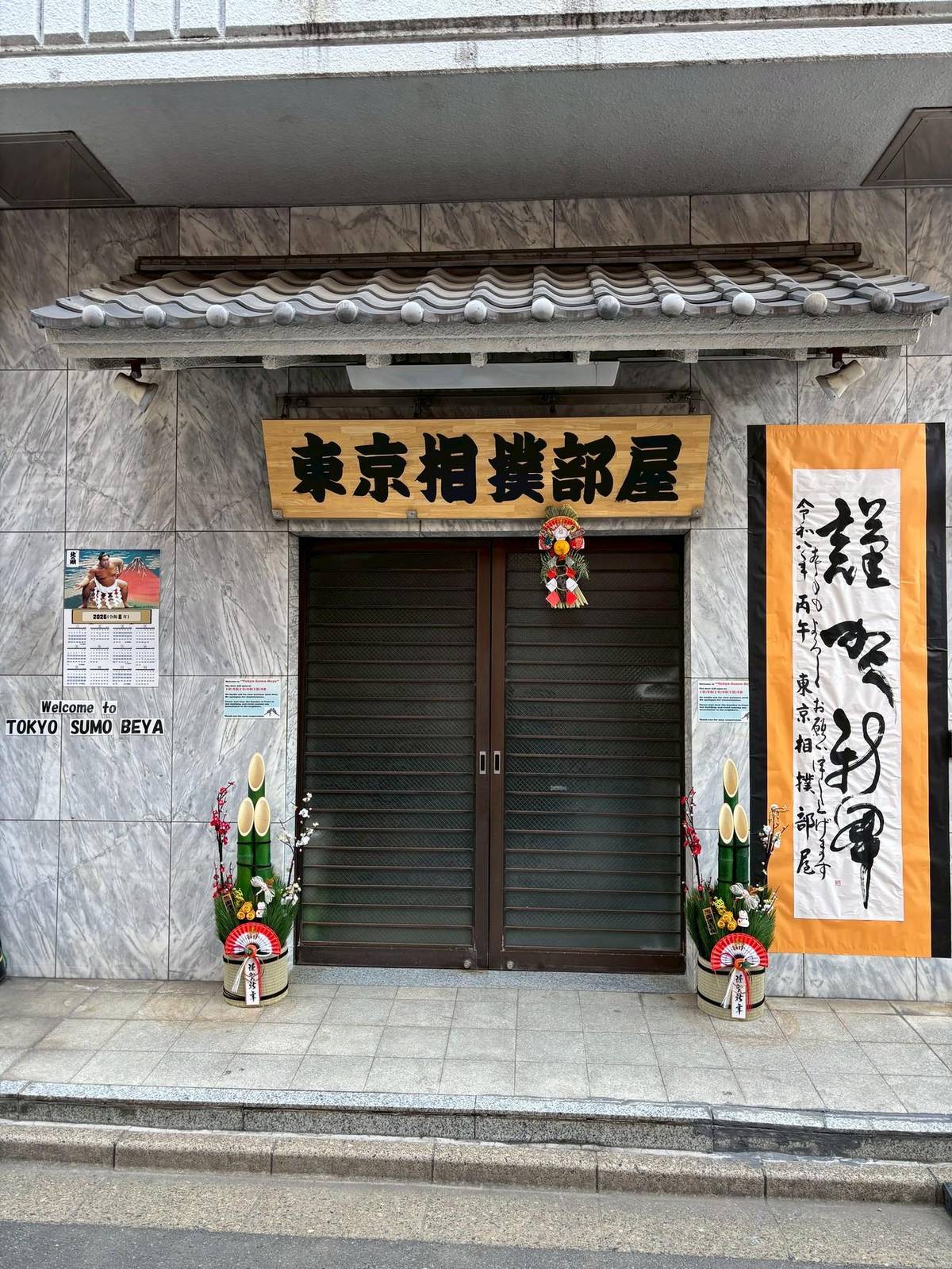
| Where | Ryogoku Kokugikan | Tokyo Sumo Beya |
| Booking | Advance sale date | Online, free cancellation |
| In English | Read the rules first | Host speaks English |
| Take part | No | Training or challenge bout |
Tournament months and length from the Japan Sumo Association and JNTO; show details from its listing.143
Three ways to see sumo
Tournament monthsReal bouts, your own seat
 Any season
 This site
Decision helper
Start from when you are in Tokyo
Six tournaments are held in Japan each year, with three in Tokyo, held in January, May and September.
Advance tickets for each tournament go on sale on a specific date listed in the official schedule; for the January 2026 tournament it was December 6, 2025.3 Popular days and better seats can sell out once sales open, so do not leave it late. Set a reminder for the sale date if you have your heart set on a particular day.
If buying in Japanese feels daunting, remember what the ticket is for: during a Grand Sumo Tournament you must have one to enter the arena, while the Sumo Museum in the same building is free.5 Buy early, take a printed or saved confirmation, and plan to read the bouts yourself with the help of a guide to the rules; our page on where to see sumo in Tokyo covers the arena and the streets around it.
Remember that a tournament ticket is only for the day printed on it, and a full day in the arena is a long sit. You can also come for the second half of the day only, when the higher-ranked wrestlers appear. Bring a light layer for the air conditioning and some patience for the rituals between bouts: they are part of the event, not a delay. Food and drink are sold inside the arena, so a long day there is easy to manage with a few breaks.
Checklist
Cost calculator
Enter your group size and compare the totals.
Total from$191
per person from $96
Check availabilityfree cancellationStarting prices per GetYourGuide, at the European Central Bank reference rate. What it costs exactly, the booking shows you.
Video
The video starts loading once you tap play.
Visitors often search for sumo in Tokyo in November, or in March, July or December. Tokyo's tournaments fall only in January, May and September, so in the other months there is no tournament in the city.1 That does not mean you have to leave without seeing sumo; it means choosing a different format. Think of it as a chance to see sumo from a different angle: closer, explained in English and on a schedule that fits your trip rather than the other way around.
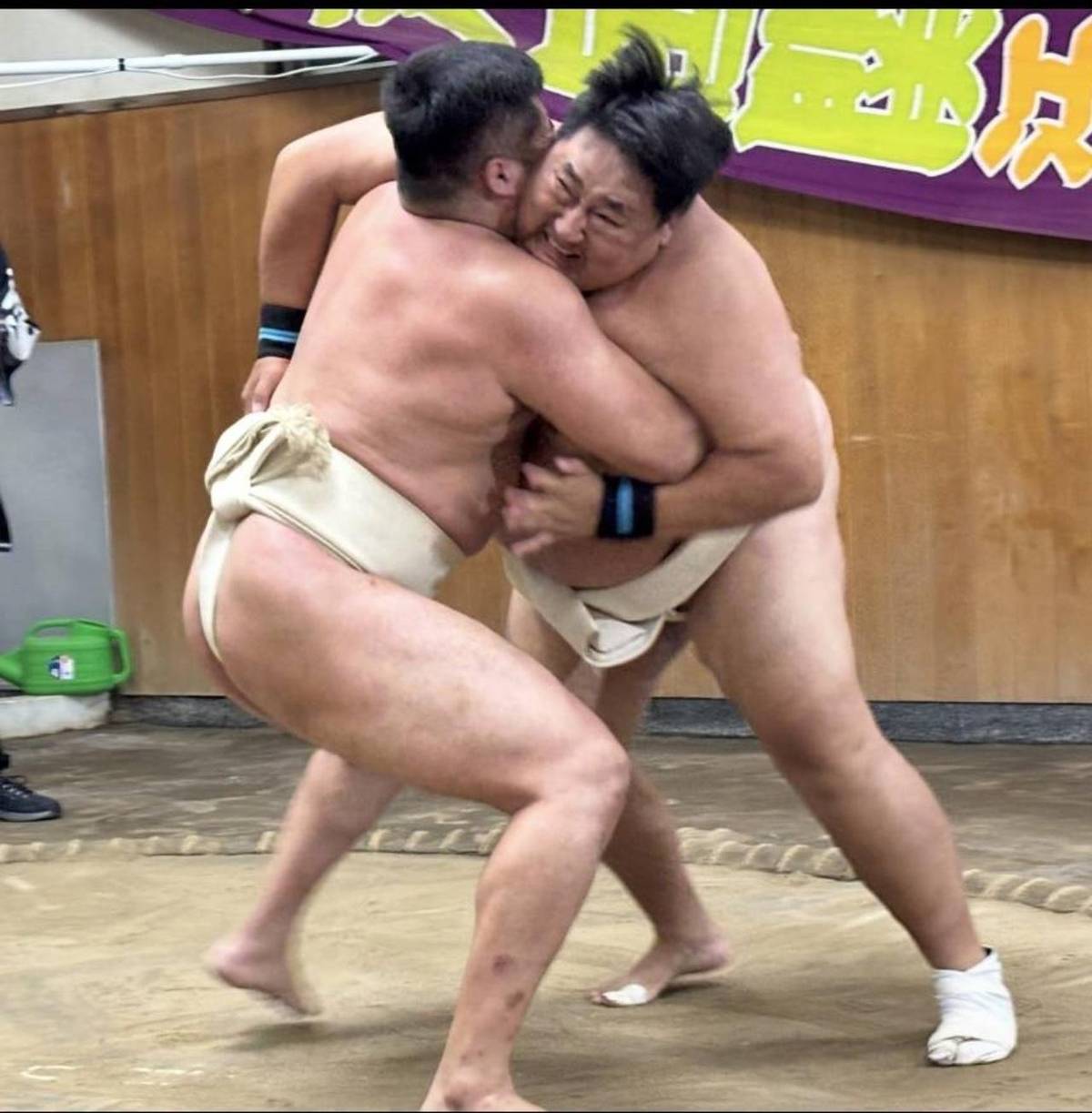
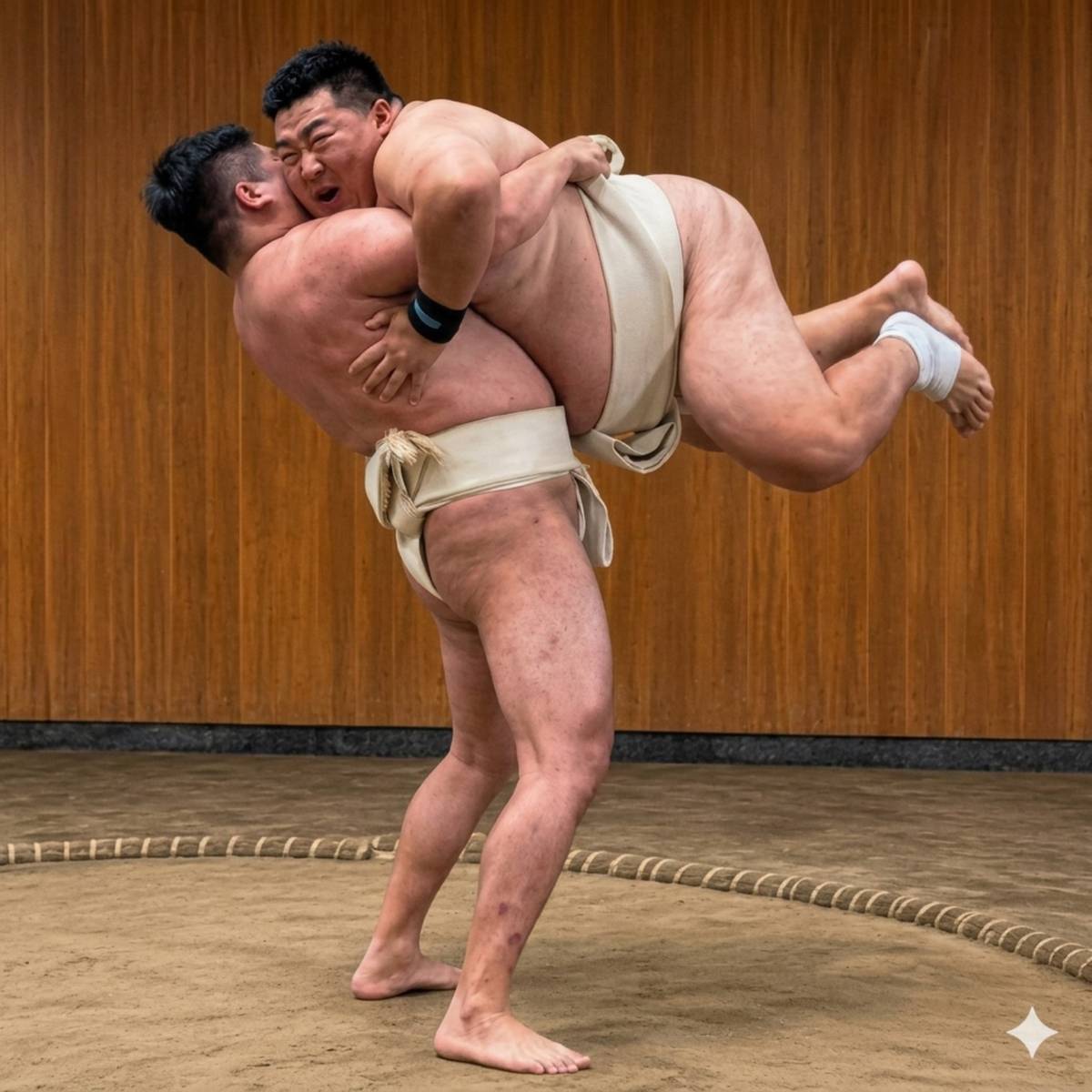
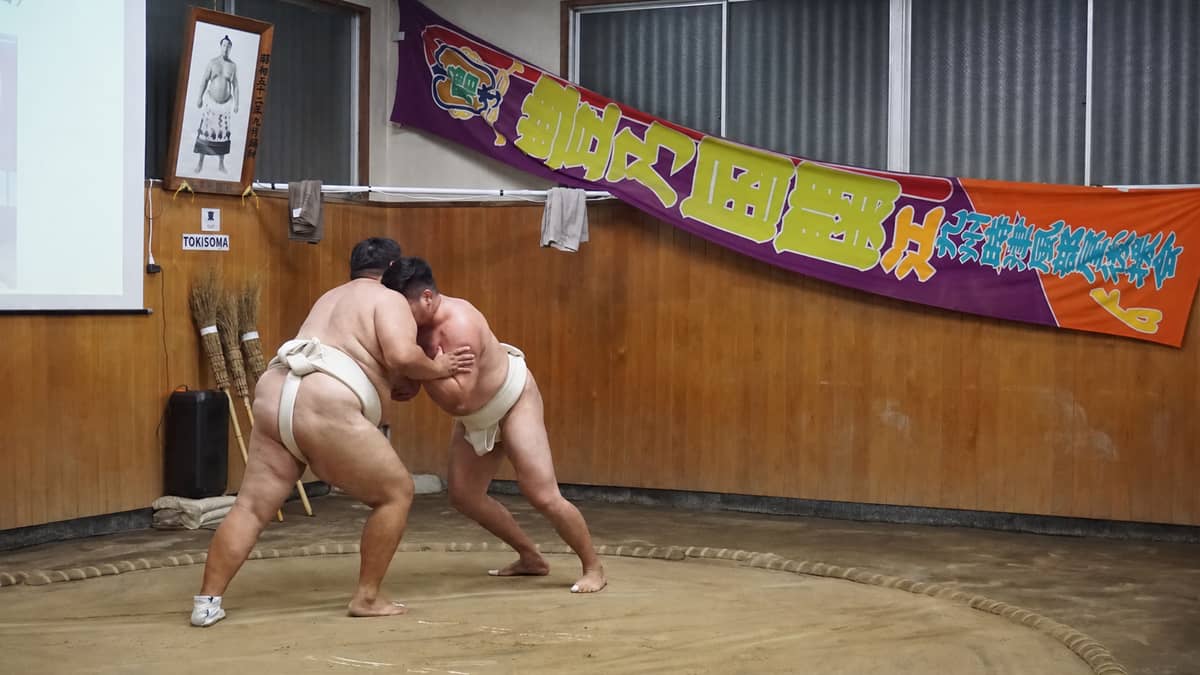
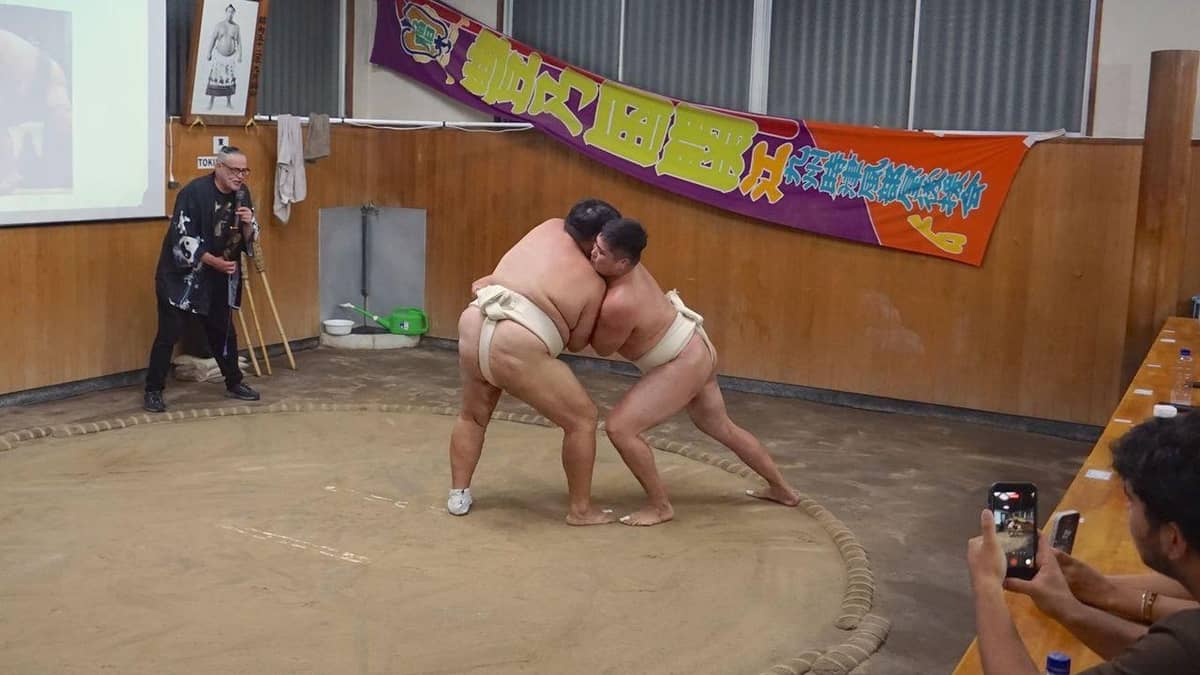
A sumo show is built for exactly this gap. At the show on this site, wrestlers demonstrate drills and fight bouts in a training hall, an English-speaking host explains the sport, and guests can try a training drill or a challenge match. The session lasts 1.5 to 2 hours and starts from $90.
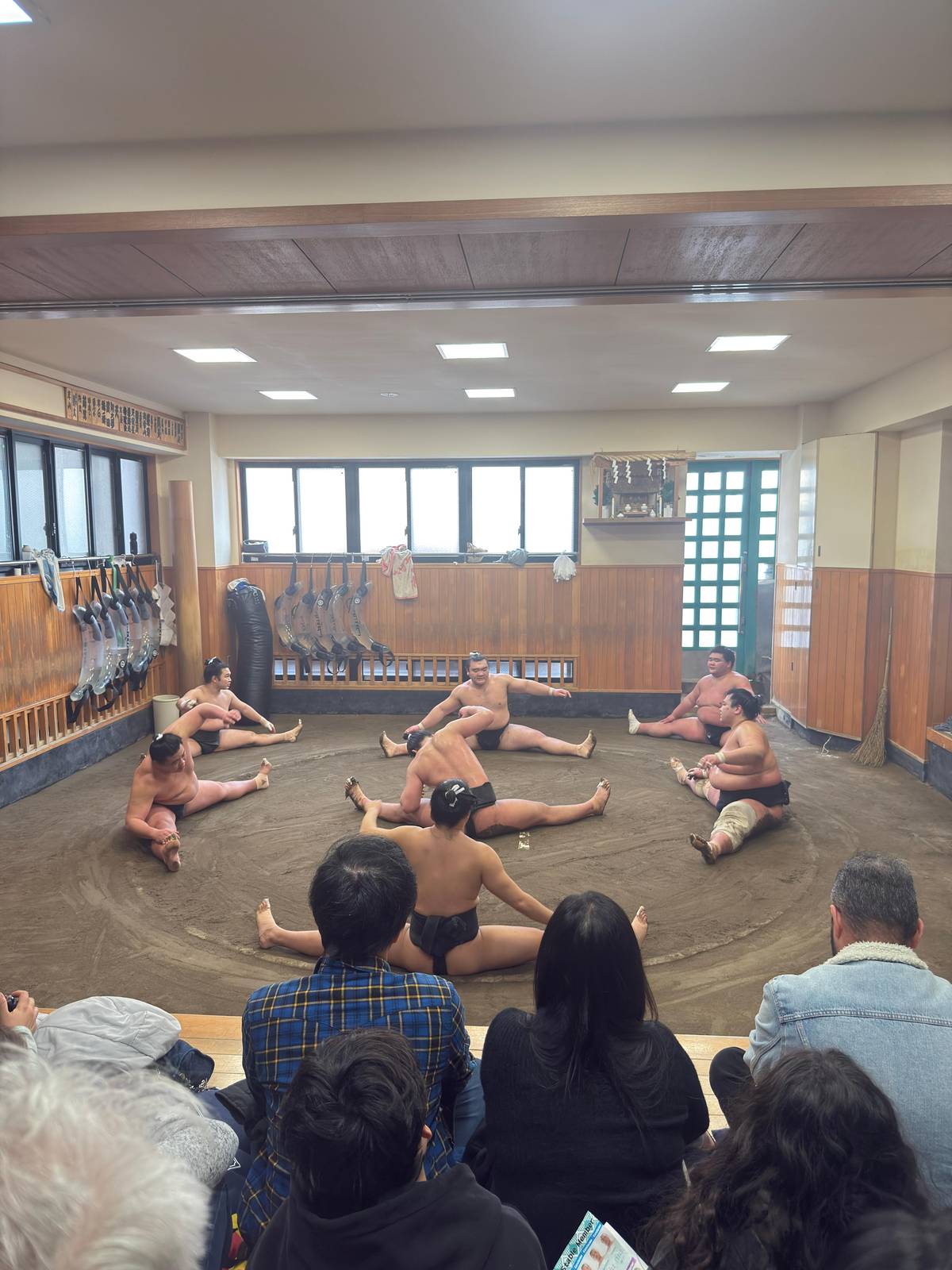
Morning practice at a sumo stable is the other option, and it shows the real daily routine rather than a staged performance. A morning practice tour with a ring-side seat runs 2 hours from $96, rated 4.81 from 129 reviews. Our guide to sumo practice in Tokyo explains how these visits work and what to expect inside a stable.
A tournament is the real thing: ranked wrestlers competing for results that matter, the ring-entering ceremony, the referee in silk robes and a hall of fans who know every name. It rewards patience and a little homework. You watch from a distance, often from high up, and the action comes in short, explosive bursts between long rituals. Seats close to the ring are limited and sought after, while seats higher up give a wider view of the whole hall and its rituals.
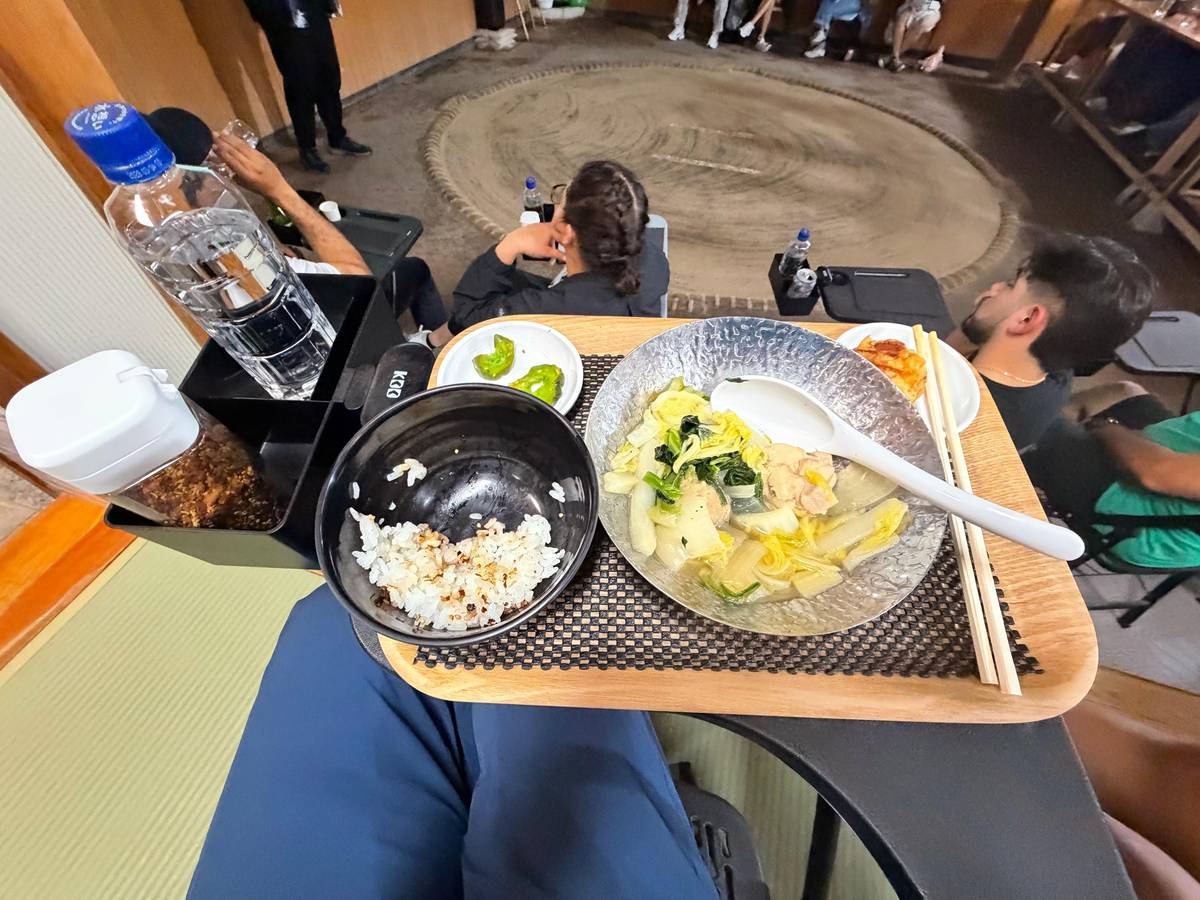
A show is the opposite in almost every way. You sit close enough to hear the slap of the charge, a host explains what you are seeing in English, and you can step into the ring yourself. At the chanko show here, the 11:00 AM and 7:00 PM sessions include an all-you-can-eat chicken hot pot, while the 8:30 AM and 3:00 PM sessions do not.
If your dates allow it, doing both is the best answer. See the show first to understand the moves and rituals, then watch a tournament day with that knowledge. If you can only do one, choose the tournament for authenticity and atmosphere, and the show for closeness, explanation and a meal.
Before each bout, wrestlers throw salt into the ring. It is a purification ritual meant to ward off evil spirits and ask for a blessing and a bout without injury.8 Watch how much salt each wrestler throws and how they do it; some fans follow a favorite wrestler partly for that moment. Between the salt and the charge, wrestlers crouch, stamp and stare each other down several times; the referee decides when they are both ready, and the hall goes quiet just before the clash.
The bout itself is simple to follow. The first wrestler to step outside the ring or touch the ground with any part of the body other than the soles of the feet loses.9 The ring itself is 4.55 meters across, small enough that a single strong charge can decide everything in seconds.10
At the top of the ranking sits the yokozuna, the highest rank in sumo.11 A yokozuna performs a ring-entering ceremony of his own, a moment worth staying for. If you are watching only part of the day, plan to be in your seat for the top-division ceremonies later on.
Book your seat
Reserve now, pay later, and cancel for free up to 24 hours before the show.
In January, May and September. Three of the six yearly grand tournaments are held in Tokyo, in those months.1
January 10 to 24, 2027. It takes place at the Kokugikan in Tokyo.2
On December 5, 2026. That is the advance sale date in the official schedule.23
15 days. Bouts are held every day of the tournament.4
No tournament, but shows and practice visits. The Tokyo tournaments are in January, May and September; a sumo show or morning practice tour fills the gap.1
Not normally. Admission is free, but during a tournament you need a ticket to enter the arena.5
Sources
Keep reading